



If you have never had your drain or sewer lines cleaned, the first appointment can feel unfamiliar. Maybe you just bought an older home and the inspector flagged the plumbing, or your basement drain backed up for the first time. Either way, you are facing a service you have never booked, on a pipe you cannot see, by a technician you have never met. That uncertainty is normal and is exactly why this guide exists.
Related service: Sewer Cleaning from Just Drains
Just Drains has spent decades clearing residential and commercial drains and sewer lines across Monmouth, Ocean, Mercer, and Burlington Counties. This guide explains what typically prompts a first cleaning, what happens when the technician arrives, and how to distinguish routine findings from concerning ones.
Most first-time sewer cleanings stem from one of three situations. Recognizing these helps set expectations for the visit.
The most common trigger is a new home purchase. When you buy a house, especially one built decades ago, you inherit a sewer lateral with an unknown history. Many buyers schedule a proactive cleaning shortly after closing to establish a clean baseline and avoid surprises.
A gurgling toilet, a slow basement floor drain, or wastewater surfacing at the lowest fixture often signals that the main line out of your home needs attention. Unlike a single slow sink, which usually points to one branch pipe, symptoms across multiple fixtures indicate the shared line.
Clay and cast-iron laterals common in older New Jersey neighborhoods accumulate scale, grease, and root intrusion over decades. If your home has never had its lines serviced and is old enough to have mature trees nearby, a first cleaning is reasonable preventive maintenance.
Knowing the sequence of a visit removes most pre-call anxiety. Here is what professional sewer line cleaning looks like, step by step.
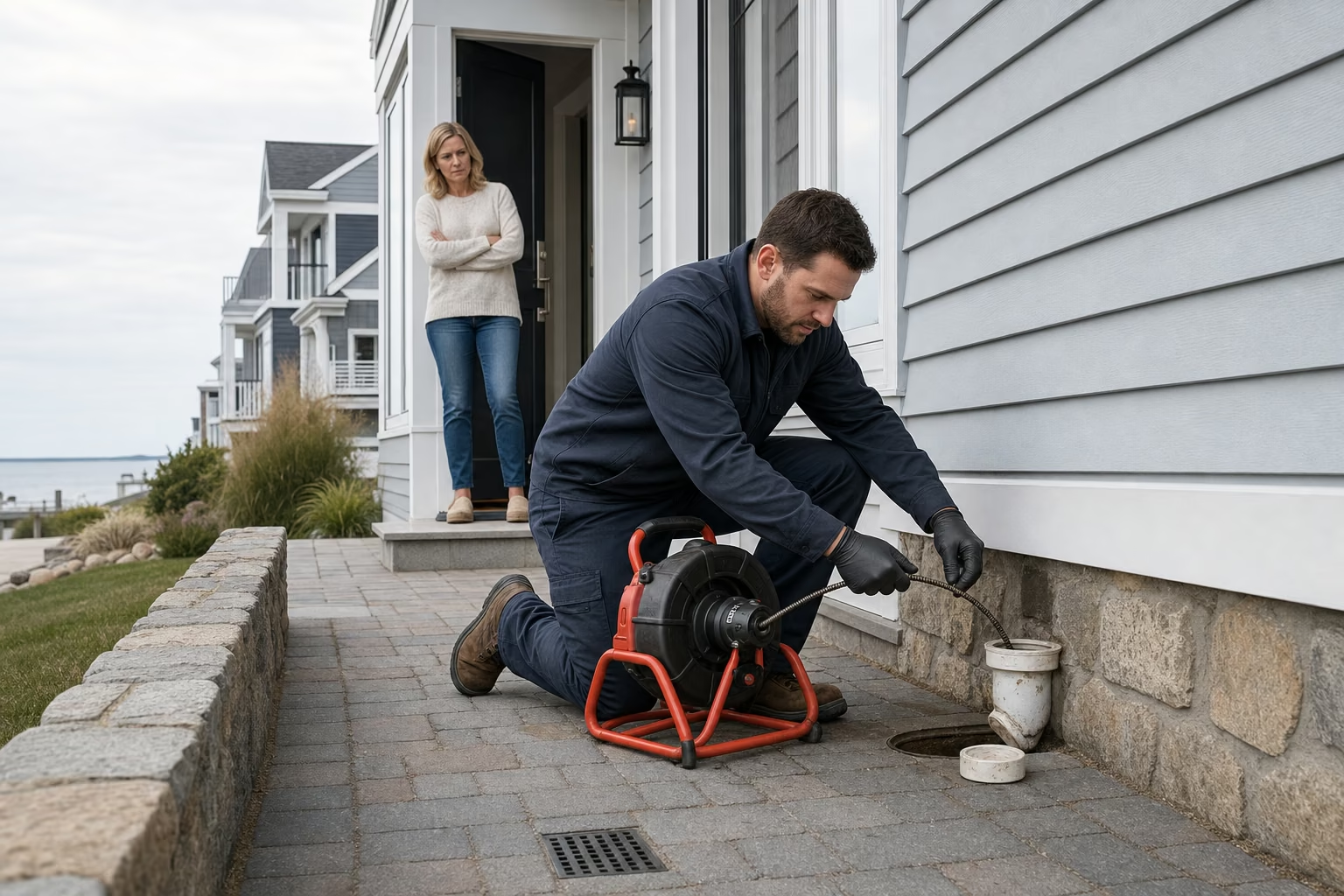
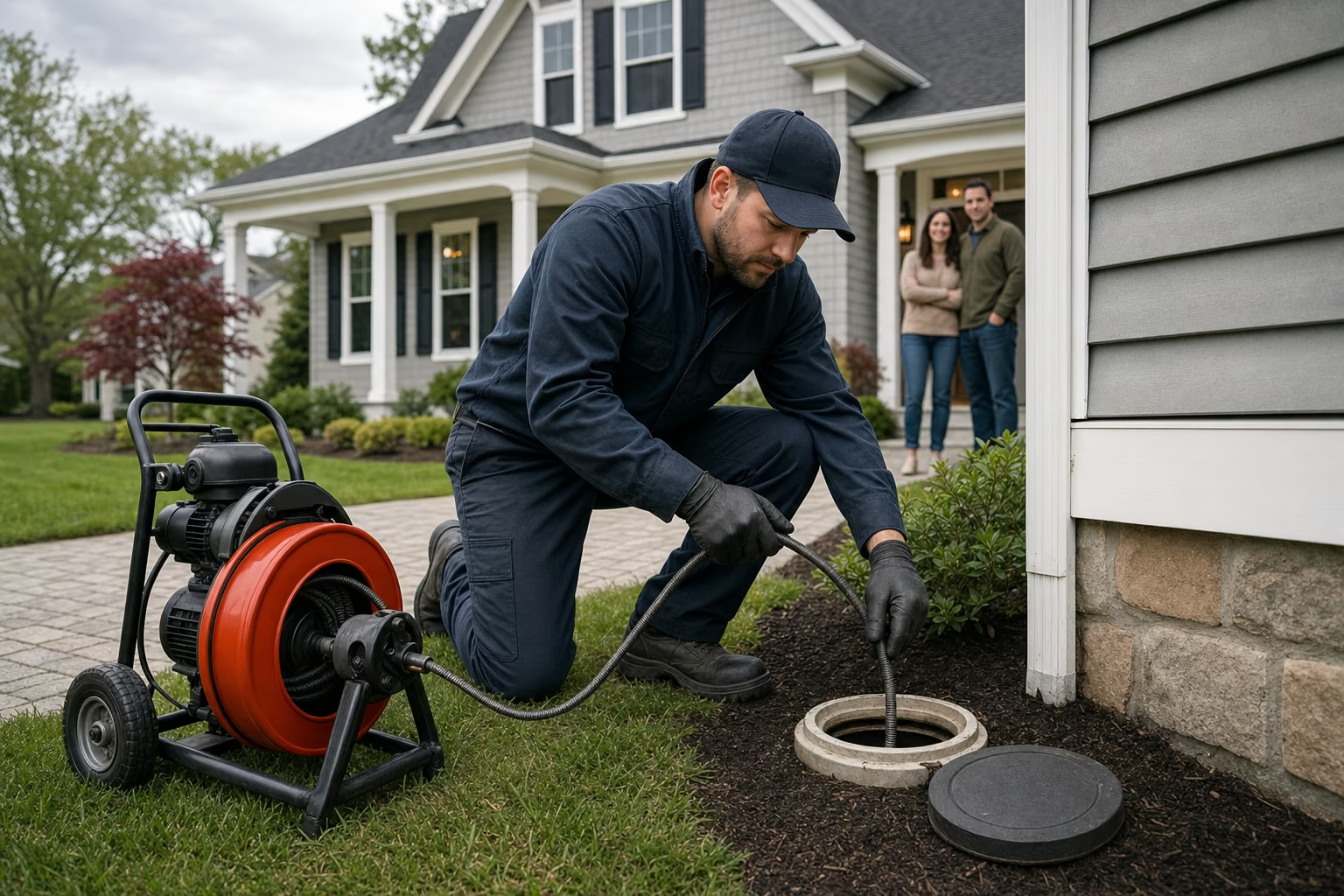
First, the technician locates the best access point. This is usually your sewer cleanout, a capped pipe (typically white or black PVC) a few inches above ground near your foundation or between the house and the street. An interior cleanout in the basement may be used instead. If you know where yours is, pointing it out speeds things up.
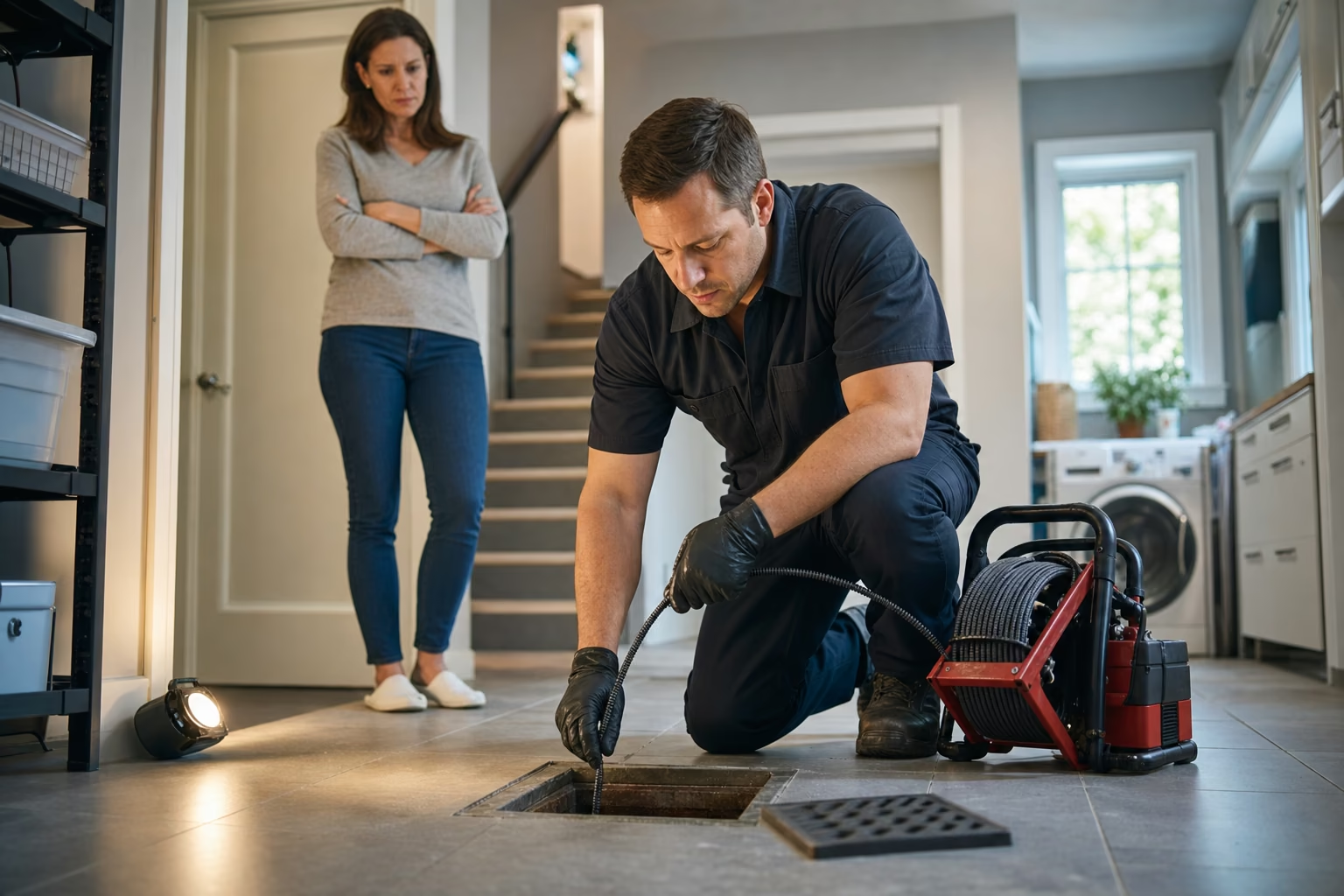
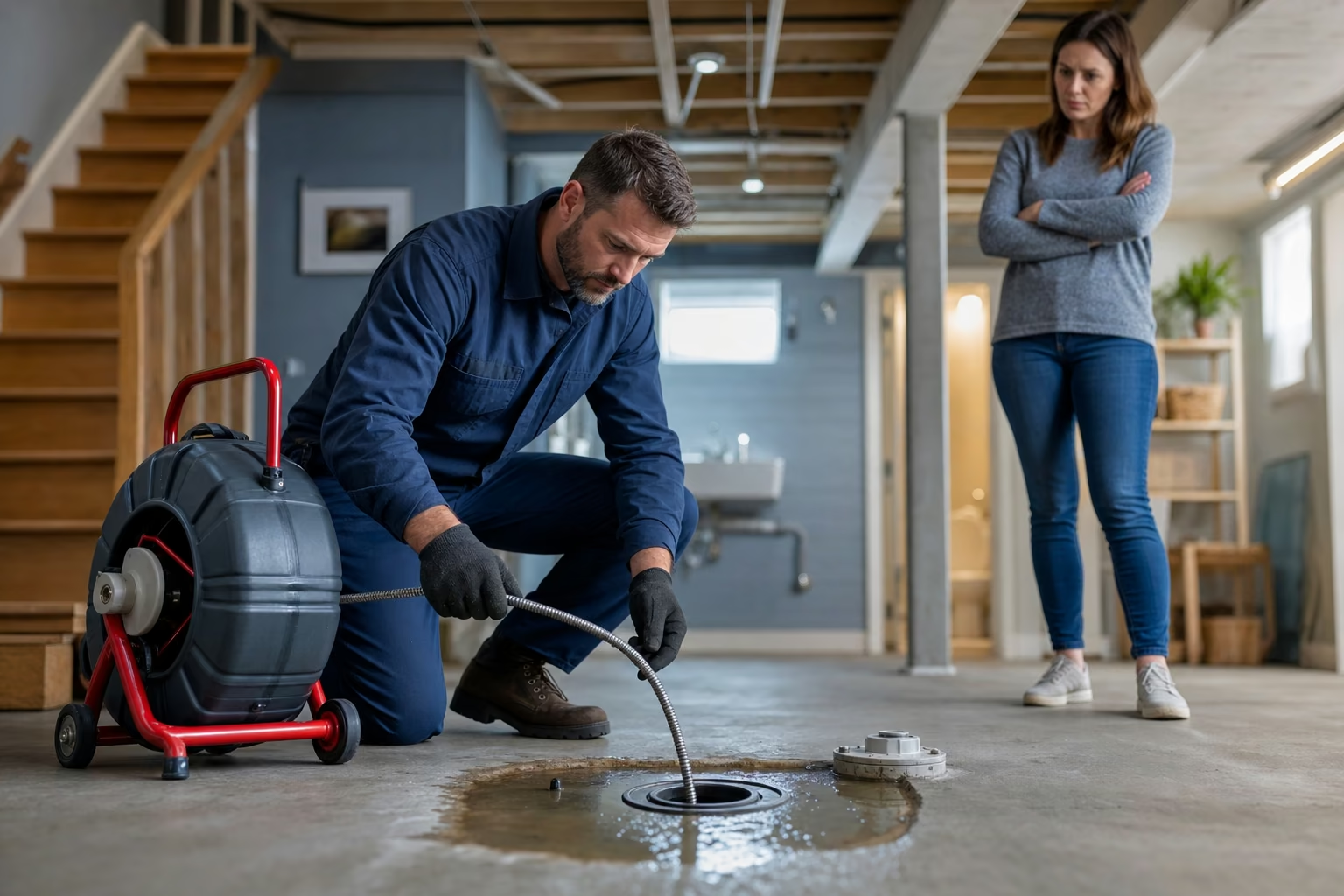
Next comes the clearing. For main line sewer cleaning, the technician feeds a mechanical sewer snake, or auger, into the line. The flexible cable rotates as it advances, breaking apart or pulling back the obstruction. This method resolves most first-time clogs in a single visit, and it is the backbone of routine drain cleaning work.
In cases of heavy grease, scale, or recurring buildup, hydro jet sewer line cleaning may be recommended. A hydro jetter uses high-pressure water through a specialized nozzle to scour pipe walls, clearing grease and debris that a cable can leave behind. It is more thorough, and a reputable technician will explain why it is or is not appropriate for your line rather than defaulting to the most expensive service.
Throughout the process, a good technician tells you what they are finding. The U.S. Environmental Protection Agency’s sanitary sewer overflow guidance identifies tree roots entering through pipe defects, fats and oils, and wipes marked “flushable” as leading causes of sewer blockages, and those are the culprits a technician most often identifies in the field.
One of the biggest sources of worry for first-timers is not knowing whether the technician’s findings are routine or a red flag. Here is the honest distinction.
A normal finding is a straightforward blockage in an otherwise sound pipe. Roots in a joint, a grease plug, or a lodged foreign object are clogs a technician clears mechanically, after which flow returns to normal. Most first-time cleanings end here: the line was blocked, the blockage is gone, and nothing further is needed.
A concerning finding suggests the pipe itself, not just its contents, has a problem. Signs include a blockage returning to the same spot shortly after clearing, a section where the cable repeatedly snags, or evidence of a sag, crack, or collapse. When a line keeps blocking at one location, that pattern often points to a structural issue rather than debris, and it may call for sewer line repair. This is when a camera inspection earns its keep.
An ethical company draws this line clearly. A single clog in a healthy pipe does not require a camera or a repair quote. You should be skeptical of any provider pushing major work after a routine, one-time clear.
Consider the experience of Ted Bertiger, a homeowner who called Just Drains in Howell, NJ, to address a sewer clog and who wanted to know whether something worse might be hiding beneath his house. That “is this the tip of the iceberg?” worry is something nearly every first-time customer feels.
Rather than guess, the team ran a camera through the line to check for additional problems, then addressed the clog. The inspection confirmed no deeper issue, just a blocked line that needed clearing.
Ted noted in his review:
“Used Just Drains from Howell, NJ, who came here to unclog a sewer issue and used a camera to see if there was any other issue in the line under my house. No issue, just a clogged line that they were able to address. Brent and Nelson from Just Drains did a great job. Nice people to deal with and highly recommend their service if the need arises. Fast and prompt service!”
Read Ted’s full Google review.
The ideal first sewer cleaning ends with a resolved blockage, a camera inspection that confirms the pipe is structurally sound, and a homeowner who feels confident rather than anxious. That is the reassurance first-time customers are looking for.
If your technician suggests a camera inspection, it helps to understand what it involves and why it is a good thing, not a scare tactic.
A sewer camera is a waterproof video head on a flexible rod that the technician feeds through the cleared line. It sends back a live view of the pipe interior, revealing what a cable cannot show: the pipe material, its condition, and the precise location and nature of any defect. Because the line must be reasonably clear for the camera to travel, an inspection typically follows the cleaning rather than precedes it.
The purpose is diagnostic. Instead of guessing why a line keeps blocking, the camera lets you and the technician see the actual cause, whether invasive roots, a bellied section holding water, or a crack that lets debris accumulate. You make an informed decision based on evidence, not a sales pitch. For many homeowners, the best result is what Ted got: the camera confirms the pipe is fine and no further work is needed.
Once the first cleaning is behind you, a natural question is how often to repeat it. There is no single answer because it depends on your home.
For a typical home with no recurring problems, having the main line cleaned every one to two years as preventive maintenance is reasonable. Homes with known risk factors need more frequent attention: properties with large mature trees near the sewer lateral, older clay or cast-iron pipes, or a history of grease-related clogs may benefit from annual service. If you have repeated backups, follow the interval your technician recommends based on their observations on your line.
You can reduce your need for cleanings between visits. Keep grease, fats, and oils out of kitchen drains, and never flush wipes, even those labeled flushable, feminine hygiene products, or paper towels. The EPA and local utilities identify these as frequent contributors to sewer blockages.
One point specific to New Jersey is worth knowing before your first service.
Your sewer system involves two separate pipes:
In New Jersey, the homeowner is generally responsible for maintaining and clearing the private lateral. Wastewater collection and treatment statewide are overseen by the New Jersey Department of Environmental Protection’s Division of Water Quality.
That means when a blockage is on your side of the connection, clearing it is your responsibility. A licensed drain and sewer cleaning company is who you call. If wastewater is already backing up, emergency service is the right call.
Booking a service you have never used before comes down to trust, and Just Drains was built for exactly this moment. We are a father-son company with three generations of plumbing experience, and drain and sewer cleaning and clearing are among our specialties. We offer clear upfront pricing with no upsells or hidden fees, affordable drain cleaning that starts right away, and a team that shows up in minutes rather than days, with no extra charge for nights and weekends. When we run a camera, it is to give you answers, not to manufacture a bigger invoice. Schedule your drain and sewer line cleaning today.

Most routine mainline cleanings are completed in a single visit, often within an hour or two, depending on the blockage and the accessibility of your cleanout.
Yes, it helps to be present so you can point out your cleanout, hear what the technician finds, and approve any additional steps, such as a camera inspection.
No. A camera is recommended when there are signs of a structural issue, such as a clog that keeps returning to the same spot, not for a routine one-time clear.
It is a smart precaution. A cleaning establishes a baseline and can surface problems early, before they become a backup at an inconvenient time.
Snaking uses a mechanical cable to break through or pull out a blockage, while hydro jet sewer line cleaning uses high-pressure water to scour grease and buildup off the full interior of the pipe.


Get an honest answer before it turns into a bigger job. Free estimates across New Jersey, 24/7.
Claim Your Offer
Tell us where to send it. We will email the coupon straight away so you can show it when you book.
One offer per job. Show the coupon at time of service. Prefer to talk? Call (732) 320-9860, 24/7.