



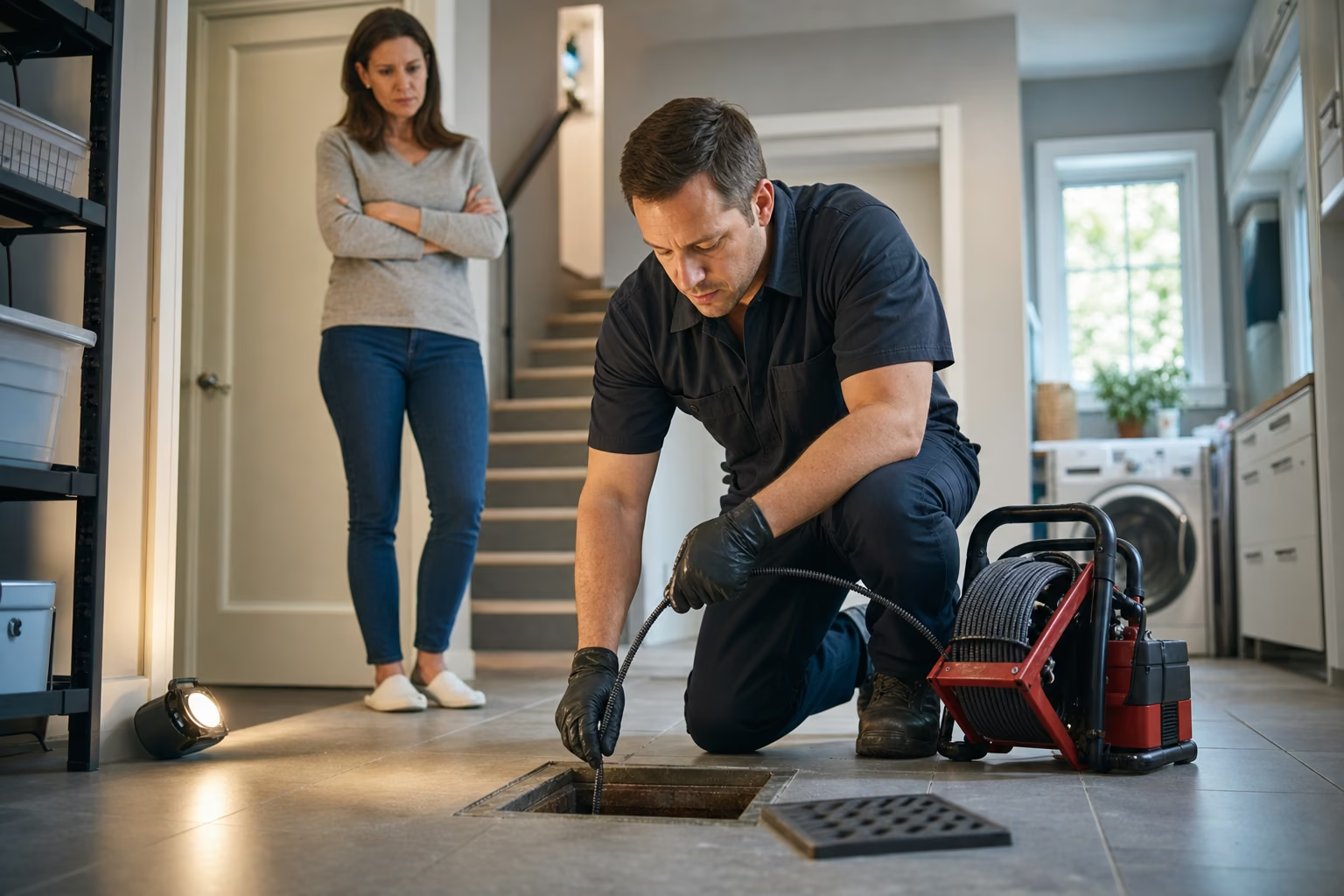
A sewer smell in the home is unsettling, embarrassing when guests notice, and frustrating because you cannot see the source. The good news is it usually traces back to a short list of causes, some you can handle yourself, and some that clearly signal calling a drain specialist.
Related service: Sewer Cleaning from Just Drains
Before the causes, one point on safety. That “rotten egg” odor is not just offensive; it is hydrogen sulfide. According to the Occupational Safety and Health Administration, hydrogen sulfide, also called sewer gas, is a flammable, toxic gas causing headaches and eye irritation even at low concentrations.
Crucially, OSHA notes that over time, you lose the ability to smell it, so a fading odor does not necessarily mean the problem is gone. Household levels from a plumbing issue are usually far below dangerous thresholds seen in industrial confined spaces, but the takeaway stands: a lingering sewer smell is a problem to identify and fix, not to live with or ignore.
This is the most common cause of a sudden sewer smell in a bathroom and the easiest to fix. Every drain has a U-shaped p-trap holding a small pool of water, and that water seal is the only thing preventing sewer gas from rising into the room. In a guest bathroom, floor drain, or basement fixture that has been unused for weeks, the trapped water evaporates, breaking the seal. DIY or pro: DIY. Run water in the fixture for a minute or pour a bucket of water down an unused floor drain to refill the trap. If the smell returns within days on a regularly used fixture, the trap may not be holding water, indicating a venting problem below.
Your plumbing system has vent pipes running through the roof, letting sewer gas escape harmlessly above the house and allowing drains to flow without gurgling. If a vent cracks, gets crushed, or becomes blocked by leaves, a bird’s nest, or debris, gas can be forced back into the living space, and pressure changes can siphon water out of your traps. DIY or pro: pro. Vent pipes run inside walls and end on the roof, so diagnosing a crack or clearing a blockage safely is not a homeowner job. It is worth having a professional inspect the system, especially if multiple drains gurgle or several rooms smell at once.
One of the two most common reasons to call a drain company is a partial obstruction in the main sewer line. When the line is partially blocked, waste moves slowly and sits in the pipe, and the gases it produces push back up through your drains. You may notice a house-wide sewer smell, slow drains, gurgling toilets, or water backing up at the lowest fixture when water is running elsewhere. DIY or pro: pro. A partial main line blockage is not something a plunger or store-bought product can reach. A professional clears it using a motorized sewer auger or hydro jetting and can run a camera to confirm the cause.
If the sewer smell in your bathroom is strongest around the base of the toilet, a failed wax ring is a prime suspect. That ring seals the toilet to the floor flange, and when it dries out, cracks, or the toilet rocks loose, sewer gas escapes around the base, sometimes leaving a slight water stain or making the toilet feel unsteady. DIY or pro: borderline. A confident DIYer can replace a wax ring since it involves pulling and resetting the toilet. If you are not comfortable removing a toilet or if the flange looks damaged, it is worth having a professional handle it to avoid a bigger leak.
This is the second major cause that points straight to a drain specialist and is common in older, tree-lined New Jersey neighborhoods. Tree roots seek moisture inside sewer laterals and work their way in through small cracks or joints, creating buildup that produces persistent sewer odors and recurring clogs, often in the same spot. DIY or pro: pro. Roots cannot be handled with anything under the sink. A professional cuts them back mechanically or clears the line with hydro jetting, then uses a camera to assess how far the intrusion has progressed and whether the pipe needs longer-term attention.
Sometimes the sewer smell in a kitchen or bathroom traces to an individual fixture’s venting, particularly under a sink where an air admittance valve (a mechanical vent) has failed or where DIY plumbing left a fixture improperly vented. In those cases, the trap empties or gas leaks at the connection, and the smell concentrates in that cabinet. DIY or pro: borderline. Replacing a failed air admittance valve is straightforward; correcting genuinely faulty vent plumbing is a job for a professional.
A localized foul smell at a single sink, especially a bathroom sink, is often just organic gunk. Hair, soap scum, toothpaste, and food residue coat the inside of the drain and overflow opening, growing a bacterial biofilm that smells sour or sewer-like even though the plumbing is otherwise fine. DIY or pro: DIY. Clean the drain and overflow hole. Mechanical cleaning with a brush, hot water, and a mild cleaner usually resolves it; avoid harsh chemical drain cleaners, which risk burns and pipe corrosion.
Older homes here often have aging cast-iron drain lines that corrode and eventually crack from the inside. A break in a pipe hidden in a wall, under a slab, or in a crawl space lets sewer gas escape into the structure, producing a smell that seems to come from nowhere and does not respond to trap or drain fixes. DIY or pro: pro. Locating and repairing a hidden pipe break requires camera inspection and professional repair. If you have ruled out the simpler causes and the smell persists, this is the direction to investigate.
If the sewer smell coincides with heavy rain or appears intermittently regardless of what you do inside, the issue may extend beyond your fixtures to your lateral connection, the municipal system, or a sump-related odor source. Storm flow can pressure the system and push odors back toward the house. DIY or pro: pro. A professional can determine whether the source is on your side of the connection, on the town’s side, or tied to a sump-related issue, which is the first step toward the right fix.
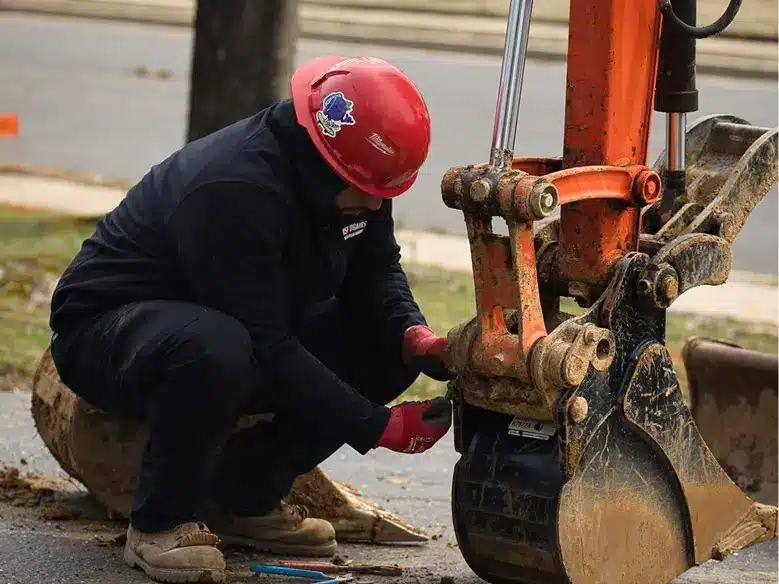
P Fung faced exactly this kind of situation: a drain problem serious enough to require a specialist, with questions about the cause and extent. Just Drains arrived in under an hour. Our plumbers used sonar and camera inspection to pinpoint the cause and resolve the issue.
As Fung put it:
“Service arrived impressively promptly in less than 1 hr. James Reyes was very efficient in the diagnosis and cleared the blockage near the street quite quickly. In addition, he and Andre used some impressive sonar and camera equipment to find the root cause and location, which will require a long-term repair down the road.”
Read P Fung’s full Google review.
The outcome illustrates why proper diagnosis matters so much for odor and blockage problems: the immediate issue was cleared quickly, restoring normal function, while the camera work provided an honest, evidence-based picture of what still lay ahead, rather than a quick patch that hid the line’s real condition.
If the smell points to a partial blockage or root intrusion, our sewer cleaning and hydro jetting services clear the line for good. Book your sewer inspection online today.
When a sewer smell in your home will not go away, you need someone who can find the actual source, not just spray deodorizer and hope. Just Drains is a father-son company with three generations of plumbing experience, operating out of Howell and serving the surrounding Monmouth and Ocean County communities. Clearing drains and sewer lines is what we do best, and diagnosing odor sources from partial main line blockages to root intrusion is squarely in our wheelhouse.

The most common cause is a dry p-trap in a rarely used fixture. Running water to refill the trap often clears it, but a persistent smell can point to a venting problem.
The sewer gas behind the odor is toxic at high concentrations, and household levels are usually far lower, but because you can stop smelling it over time, a lingering odor should be identified and fixed rather than ignored.
A house-wide odor often indicates a partial main line blockage, a vent pipe problem, or root intrusion, all of which typically require a professional to diagnose and clear.
Simple causes like a dry trap or a dirty drain are DIY, but vent issues, main line blockages, root intrusion, and hidden pipe damage require a drain specialist.
Heavy rain can pressure the sewer system and push gas back toward your home, which may indicate an issue at your lateral connection, on the municipal side, or from a sump-related odor source.


Get an honest answer before it turns into a bigger job. Free estimates across New Jersey, 24/7.
Claim Your Offer
Tell us where to send it. We will email the coupon straight away so you can show it when you book.
One offer per job. Show the coupon at time of service. Prefer to talk? Call (732) 320-9860, 24/7.