



When water will not go down or comes back up, the first question is not “how do I fix it” but “what am I actually dealing with?” A simple drain clog and a full sewer backup can look similar at first glance, yet they sit at opposite ends of the severity scale. One is often a contained, affordable fix. The other is a systemic problem that can flood your home with contaminated water. Telling them apart is the difference between an appropriate response and an expensive mistake.
Related service: Sewer Cleaning from Just Drains
This guide gives you the framework professionals use to distinguish sewer backup symptoms from ordinary drain clog symptoms and explains what each diagnosis means for how urgently you need to act and its likely cost.
Everything comes down to one distinction: scope.
Think of it as the difference between one blocked driveway and a blocked road that every driveway feeds into. This single distinction, one fixture versus the whole system, explains the symptoms below and the decisions that follow.
A drain clog announces itself in one place. Recognizing the signs of a clogged drain helps you rule out a more serious diagnosis.
This is the more routine, lower-stakes scenario, and it is frequently resolved in a single drain cleaning visit.
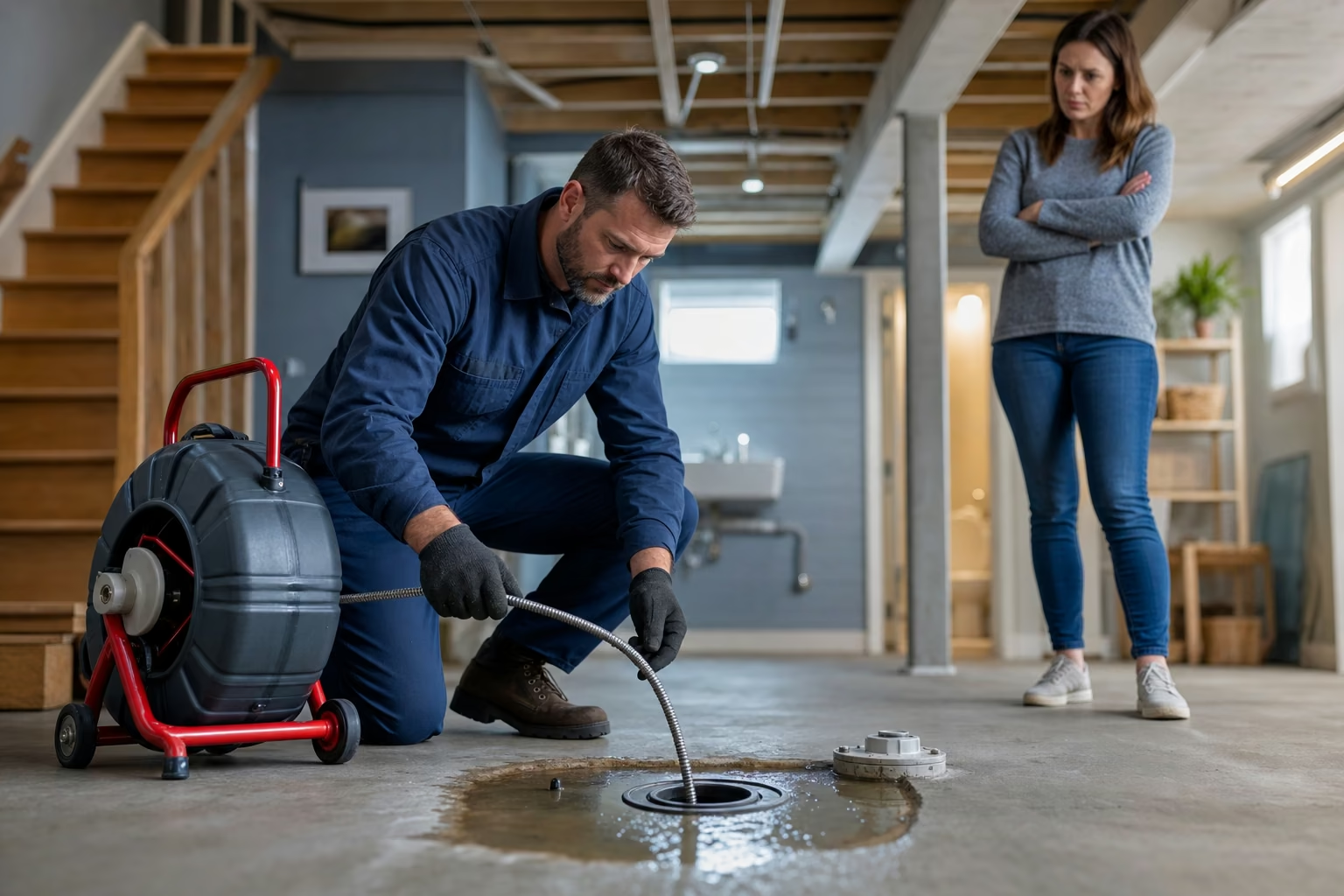
A sewer backup behaves differently because the obstruction is in the shared main line. That blockage causes signs of a sewer backup, indicating the problem is bigger than a single drain.
If several of these are present, treat it as a main line issue and consider professional sewer cleaning.
The two problems differ not just in scope but sharply in how fast you need to respond because their consequences are not the same.
The restoration industry does not treat sewage as ordinary water. Under the ANSI-accredited IICRC S500 Standard for Professional Water Damage Restoration, water from a sewer backup is classified as Category 3, or “black water,” grossly unsanitary water containing pathogenic agents.
That classification is why a sewer backup calls for immediate action and professional handling rather than a mop and bucket. If your home is experiencing an active backup, stop running water, keep people and pets away from the affected area, and do not attempt to clean up standing sewage yourself. This is when emergency service is the right call.
Cost tracks directly with scope and severity, so an accurate diagnosis protects your wallet and your home.
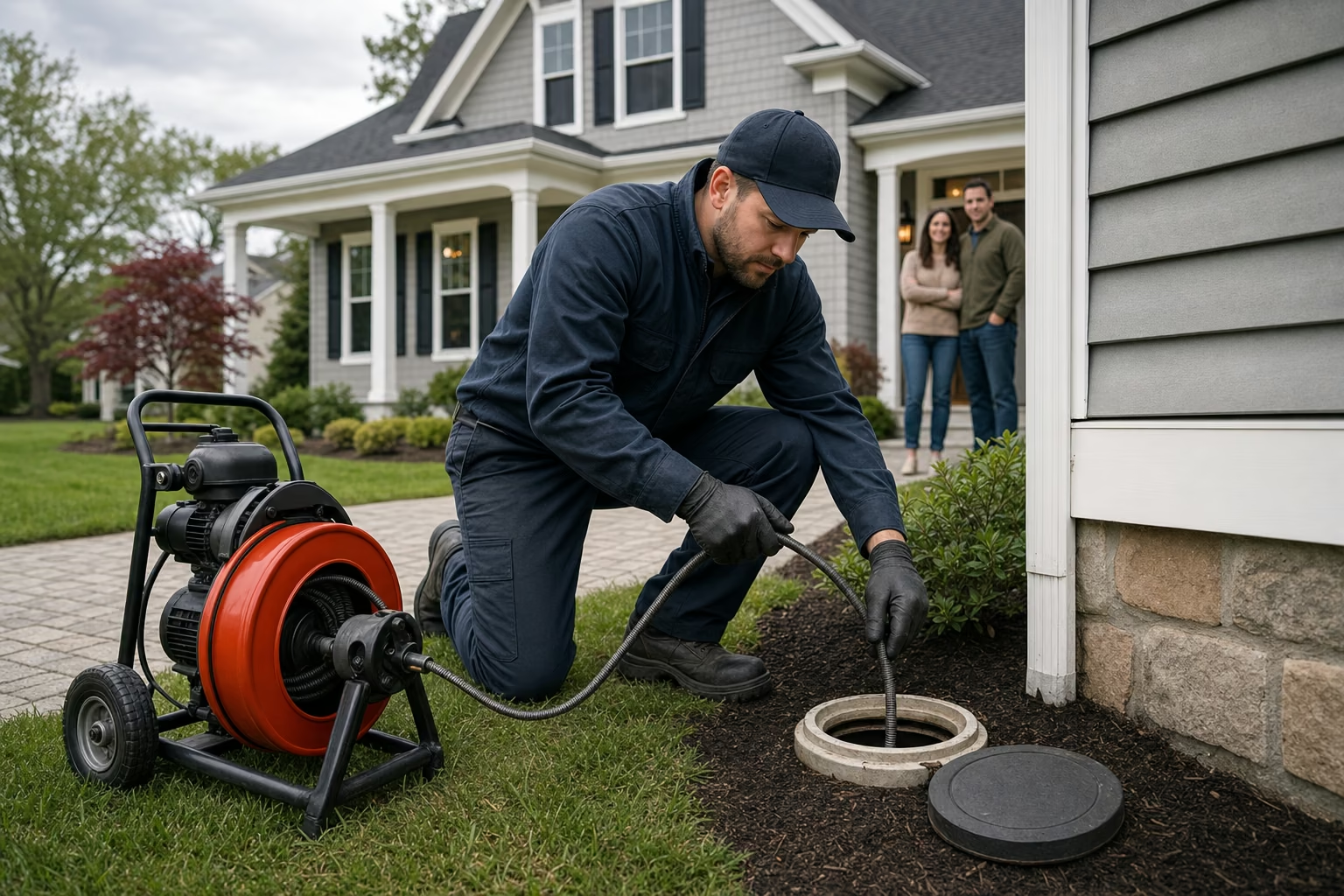
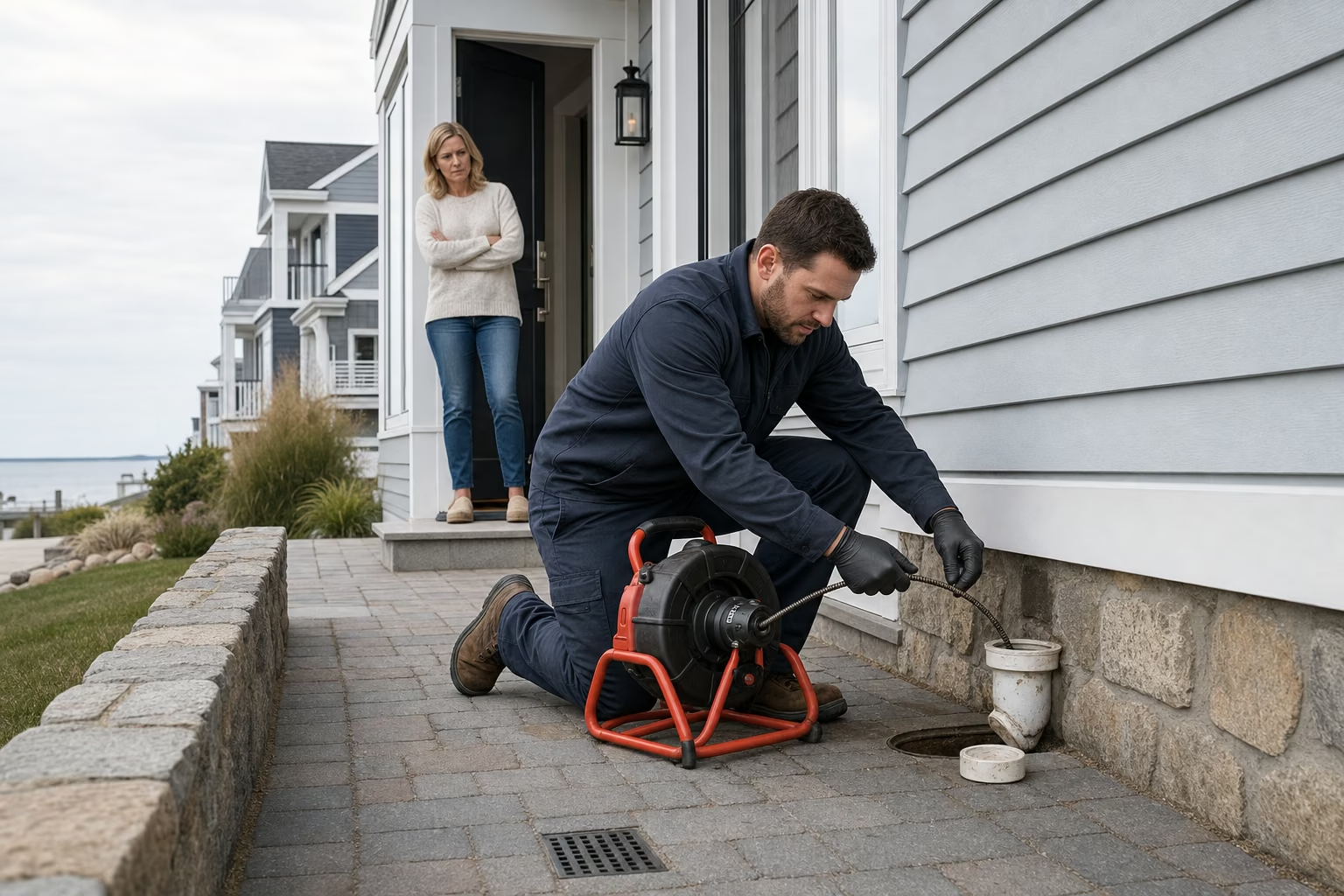
Clearing a single drain clog is typically the most affordable service because it is a contained mechanical job on one branch line. A main line blockage costs more because it requires accessing the sewer line through the cleanout and clearing it with a motorized auger or hydro jetting, often with a camera inspection to confirm the cause.
If a backup has already released Category 3 water into a finished space, the plumbing repair is only part of the equation, as the contaminated area also requires proper cleanup in addition to line clearing.
The takeaway is not to frighten but to make the case for acting early because a problem caught as a slow drain is much cheaper to resolve than the same problem caught as a basement full of sewage.

Hyosung Bidol-Lee spent all morning trying to unclog a kitchen sink before deciding to call a professional. Just Drains responded promptly and sent Tim, who first performed the diagnostic work, talked through the problem, and then got to work, snaking 35 feet into the pipe to clear the obstruction.
Hyosung wrote in his review:
“After struggling all morning to unclog my kitchen sink, I decided I needed professional help. Just Drains responded promptly and sent Tim to do the job. Tim listened to what I had already done and assessed the situation. He talked me through the problem and got to work. He snaked 35 feet into the pipe and unclogged it. He then made sure the pipes did not leak. He finished by cleaning up the job site. I highly recommend Tim and Just Drains.”
Read Hyosung’s full Google review.
The outcome illustrates the value of a professional diagnosis because even when it turned out to be a clog rather than a backup, the problem was fully resolved, the line was verified to be sound, and the homeowner left with confidence rather than lingering doubt about whether it would return. If you are unsure what you are dealing with, book your drain inspection online today.
The honest reality is that the symptoms overlap enough that you cannot always be certain from inside your home. That uncertainty is itself a good reason to bring in a professional. Just Drains is a father-son company with three generations of plumbing experience, operating out of Howell and serving the surrounding Monmouth and Ocean County communities. Diagnosing whether a problem is an isolated clog or a systemic sewer backup, and clearing either one, is the core of what we do.

If only one fixture is affected, it is likely a localized clog. If multiple fixtures back up together, or if using one makes another gurgle, it points to a main line sewer backup.
Yes. Backed-up sewage is classified as grossly contaminated black water, so you should stop using the water, stay out of the affected area, and call a professional right away.
No. A main line obstruction is beyond the reach of household tools, and the contaminated water involved makes DIY cleanup a health risk best left to professionals.
That cross-fixture reaction is a classic symptom of a sewer backup because it indicates air trapped behind an obstruction in the shared main line rather than a problem with either fixture.
Generally, yes, because clearing one branch line is a contained job, while a main line blockage requires more equipment, and a backup that damages finished space adds cleanup costs.
Share This


Get an honest answer before it turns into a bigger job. Free estimates across New Jersey, 24/7.
Claim Your Offer
Tell us where to send it. We will email the coupon straight away so you can show it when you book.
One offer per job. Show the coupon at time of service. Prefer to talk? Call (732) 320-9860, 24/7.