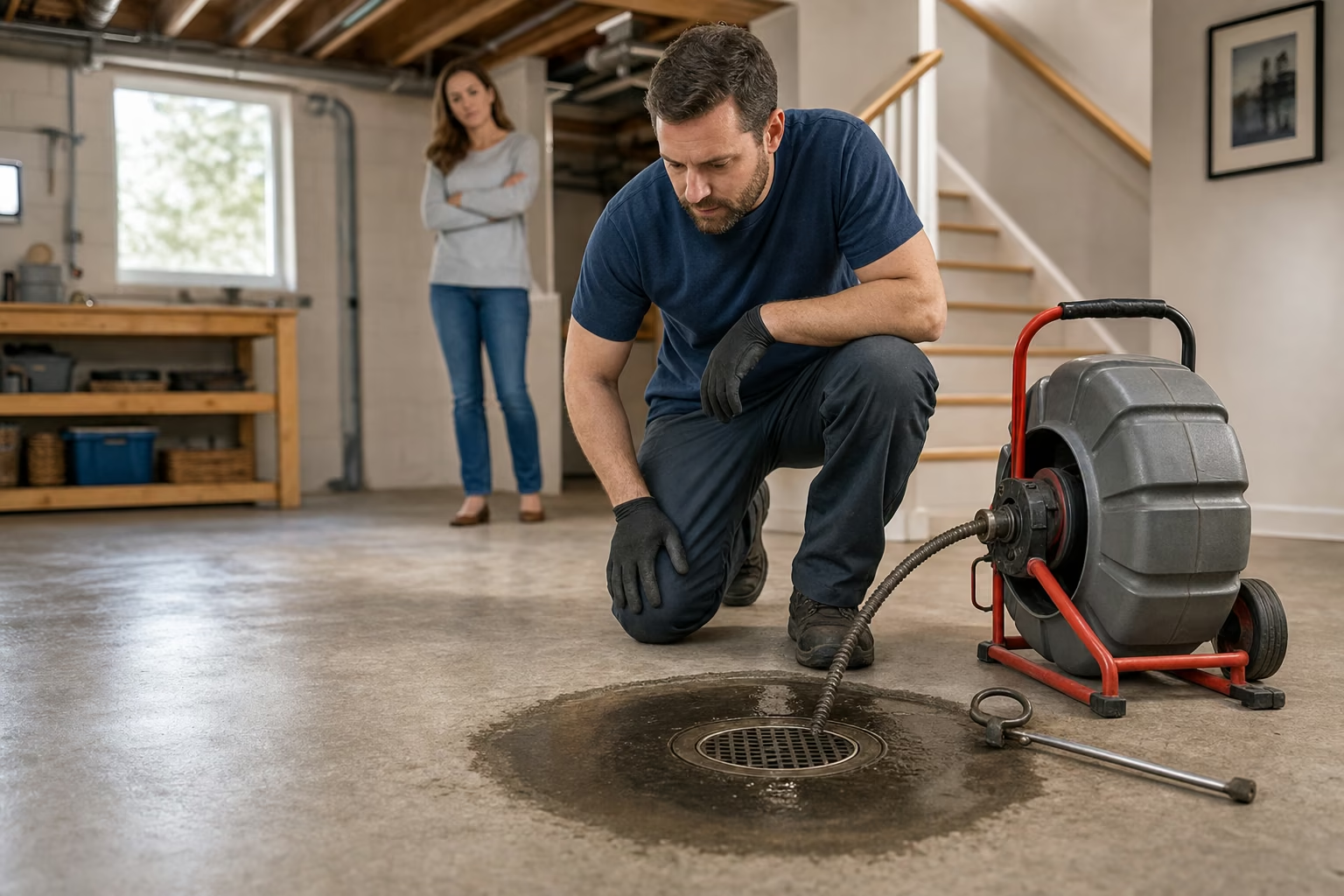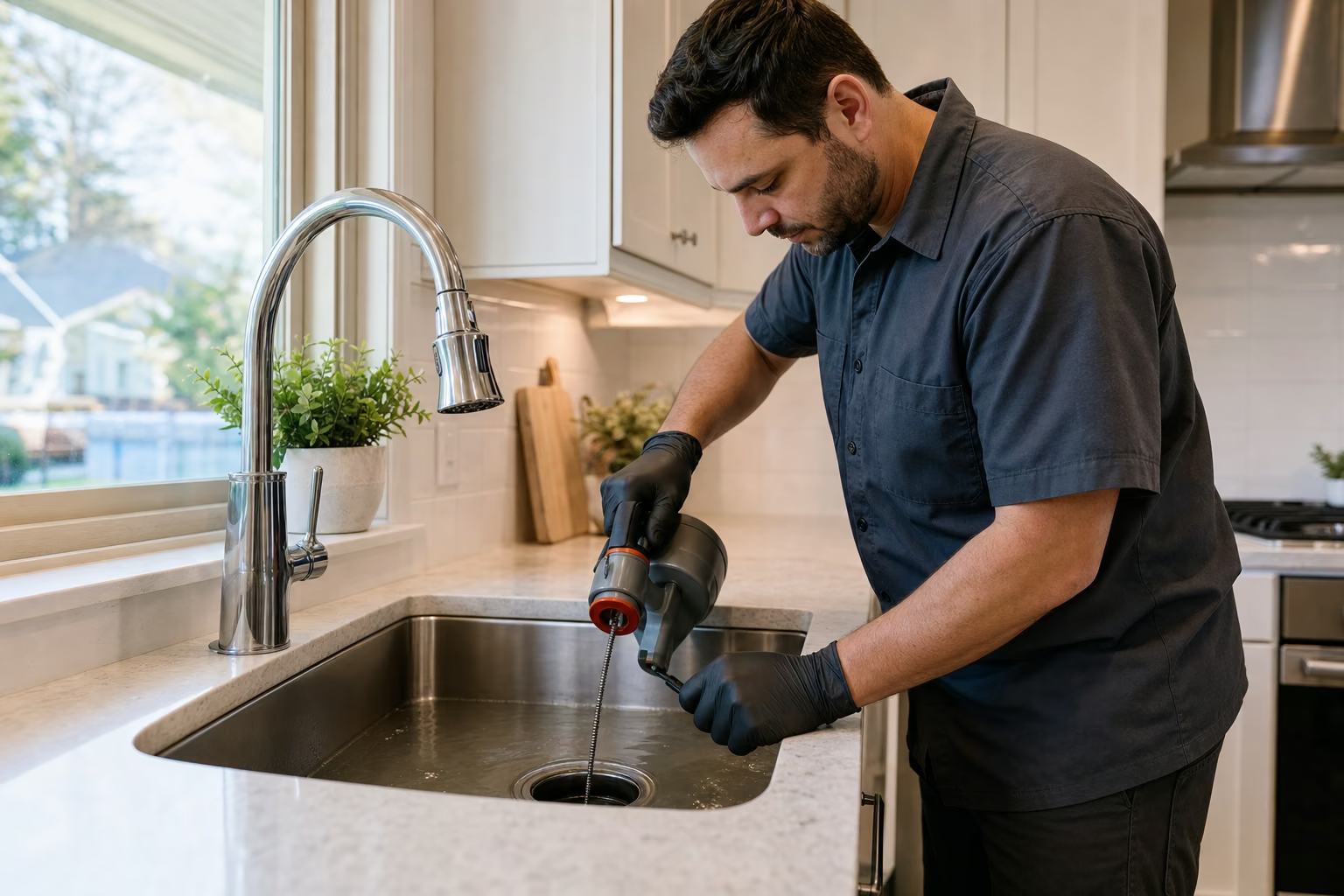






A drain that clogs once is routine. A bathroom drain that keeps clogging, no matter how many times you clear it, is trying to tell you something. Recurring clogs rarely happen by chance; they occur because a specific cause keeps rebuilding the blockage. Until you address that cause, you remain stuck in a cycle of plunging and waiting for the next backup.
Related service: Clogged Drain Repair from Just Drains
Before the full list, it helps to know that most bathroom drain clogs trace back to three culprits working alone or together: hair, soap scum, and the p-trap under your sink. Hard water makes all three worse. The U.S. Geological Survey notes that in hard water, soap reacts with calcium to form “soap scum,” an insoluble residue that coats the inside of your drainpipe. Over time that residue, along with mineral scale, narrows the pipe much like cholesterol narrows a blood vessel.
Hair is the number one enemy of a bathroom drain. Every shower and shave sends strands down the drain, where they catch on small irregularities inside the pipe or wrap around the stopper crossbars. Once a small mat forms, it becomes a net that snags everything else passing by, and the clog grows. This is why a bathroom sink drain that keeps clogging often comes back to hair you cannot see from above.
Soap is supposed to wash away, but it does not always leave cleanly. In hard water it reacts with calcium and leaves an insoluble residue behind. In areas with harder water, soap scum bonds more readily and builds a sticky layer that narrows the pipe and gives hair something to cling to.
The p-trap is the U-shaped bend in the pipe beneath your sink. Its job is to hold water and block sewer gas, but its shape also makes it a common place for debris to settle. Hair, soap scum, toothpaste, and small objects collect at the bottom of that bend. Because it is the low point, a clog forms there before anywhere else. A bathroom drain line that keeps clogging in the same spot is often a p-trap steadily re-collecting debris.
The bathroom sink takes more than water. Toothpaste, thick cosmetic products, and skincare residues do not fully dissolve. They combine with soap scum to thicken the coating inside the drain over time.
In addition to soap scum, minerals in hard water can deposit as scale directly on pipe walls. That scale progressively reduces the interior diameter of the pipe, leaving less room for water and debris to pass and making clogs more frequent over time.
Your drains rely on vent pipes to let air in so water flows smoothly. If the vent serving your bathroom is blocked, your fixtures can drain slowly and gurgle, which mimics a clog and makes it worse. This is easy to misdiagnose as a simple blockage when the real issue is airflow.
Bathrooms are full of small items that end up down the drain: jewelry, bottle caps, cotton swabs, dental floss, and in family bathrooms, the occasional small toy. Floss is a particular offender because it does not break down and readily tangles with hair, anchoring a clog.
Sometimes the bathroom drain is not the real problem. If the clog is beyond the branch pipe for that fixture, in a line shared with other fixtures, or in the main line, clearing the sink only provides temporary relief because the true obstruction is downstream. This cause separates a simple clog from a signal worth investigating, and we will come back to it.
Honesty matters here, because many bathroom clogs are genuinely a do-it-yourself job, and it is worth knowing where the line falls.
You can reasonably handle a first-time or occasional clog yourself. Removing and cleaning the stopper, pulling out the visible hair mat, and manually cleaning the p-trap (placing a bucket underneath, unscrewing it, and clearing debris) resolve many bathroom clogs. A plunger or a simple drain snake on that fixture is also fair game.
We would steer you away from chemical drain cleaners. They pose real burn and pipe-corrosion risks, and when they encounter a recurring clog, they rarely reach the true cause, leaving you with the same problem plus a caustic pipe.
The clearest signal that DIY has run its course is repetition itself. If you have cleaned the trap, cleared the hair, and the drain clogs again within days or weeks, the cause lies beyond what a surface fix can reach. That is the point to bring in professional drain cleaning.
This is the part most homeowners miss and the reason this article exists. A clog that keeps returning despite proper cleaning is not a cleaning failure, it is information.
It usually means the obstruction is deeper in the system than the trap you can reach. A few patterns point that way:
When those signs appear, the right move is a professional diagnosis, often a camera inspection, to determine the true location and cause rather than repeatedly clearing the same spot.
Mary needed her bathroom sink drain cleared and, like anyone booking an unfamiliar service, wanted it handled without hassle, surprises, or mess. Anthony arrived within the window she had scheduled online, worked quickly, and cleared the bathroom sink drain.
“The technician, Anthony, came during the hours that I scheduled online, worked quickly, cleared my bathroom sink drain, cleaned up after himself, charged the amount promoted online, and was very pleasant. An excellent experience.”
Read Mary’s full Google review.
The outcome is the quiet ideal of drain service: the clog cleared, the space left clean, and the homeowner charged exactly what was promised. That combination of speed, transparency, and respect for your home separates a professional from a gamble.

Prevention is far easier than repeated clearing. A drain screen or hair catcher over the shower and sink drains stops the biggest cause before it starts. Wiping excess product off before rinsing, running hot water after use to help move soap residue along, and periodically cleaning the stopper and p-trap all slow buildup.
If your home has hard water, remember that soap scum and scale accumulate faster, so clean your drains more often. When a clog keeps coming back despite this, treat it as the signal it is and have the line properly inspected.
If your bathroom drain keeps clogging no matter how many times you clear it, the smart move is to find out why rather than repeat the same fix. Just Drains is a father-son company with three generations of plumbing experience, operating right out of Howell and serving the surrounding Monmouth and Ocean County communities. Diagnosing why a drain keeps clogging and clearing it at the source is exactly what we do. Schedule your drain inspection online today.

The most common causes are hair and soap scum building up in the p-trap. If it recurs quickly after cleaning, the obstruction may sit deeper in the line.
Yes. For occasional clogs, clean the stopper and p-trap or use a plunger or hand snake. Avoid chemical cleaners, and call a professional if the clog keeps returning.
It can. Hard water reacts with soap to form soap scum and deposits mineral scale that narrows the pipe over time, and both accelerate buildup.
Use a drain screen to catch hair, wipe product residue before rinsing, run hot water after use, and periodically clean the stopper and p-trap.
Call when the same drain clogs repeatedly despite cleaning, when multiple fixtures are affected, or when you notice gurgling or slow drains elsewhere in the house.


Get an honest answer before it turns into a bigger job. Free estimates across New Jersey, 24/7.
Claim Your Offer
Tell us where to send it. We will email the coupon straight away so you can show it when you book.
One offer per job. Show the coupon at time of service. Prefer to talk? Call (732) 320-9860, 24/7.