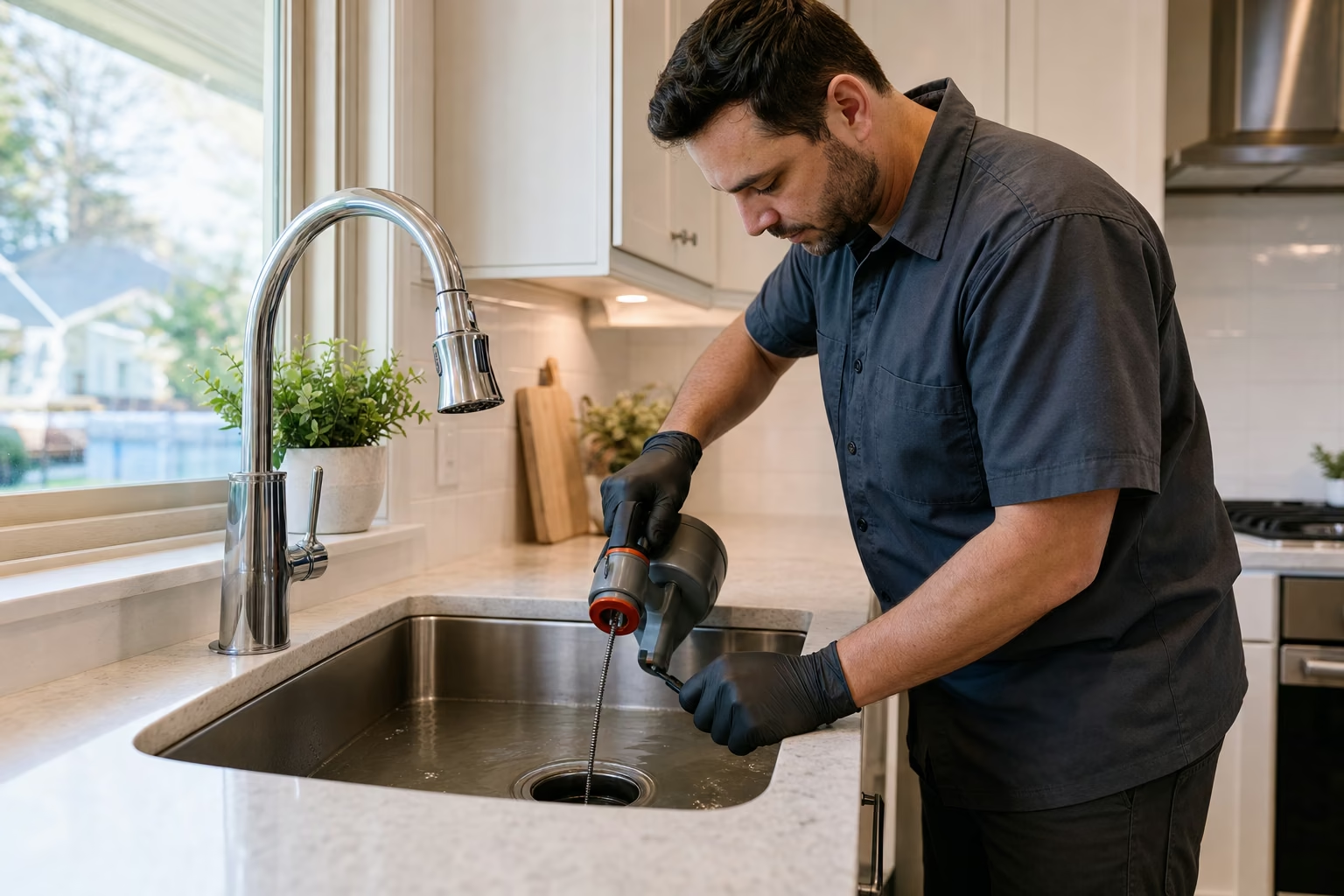




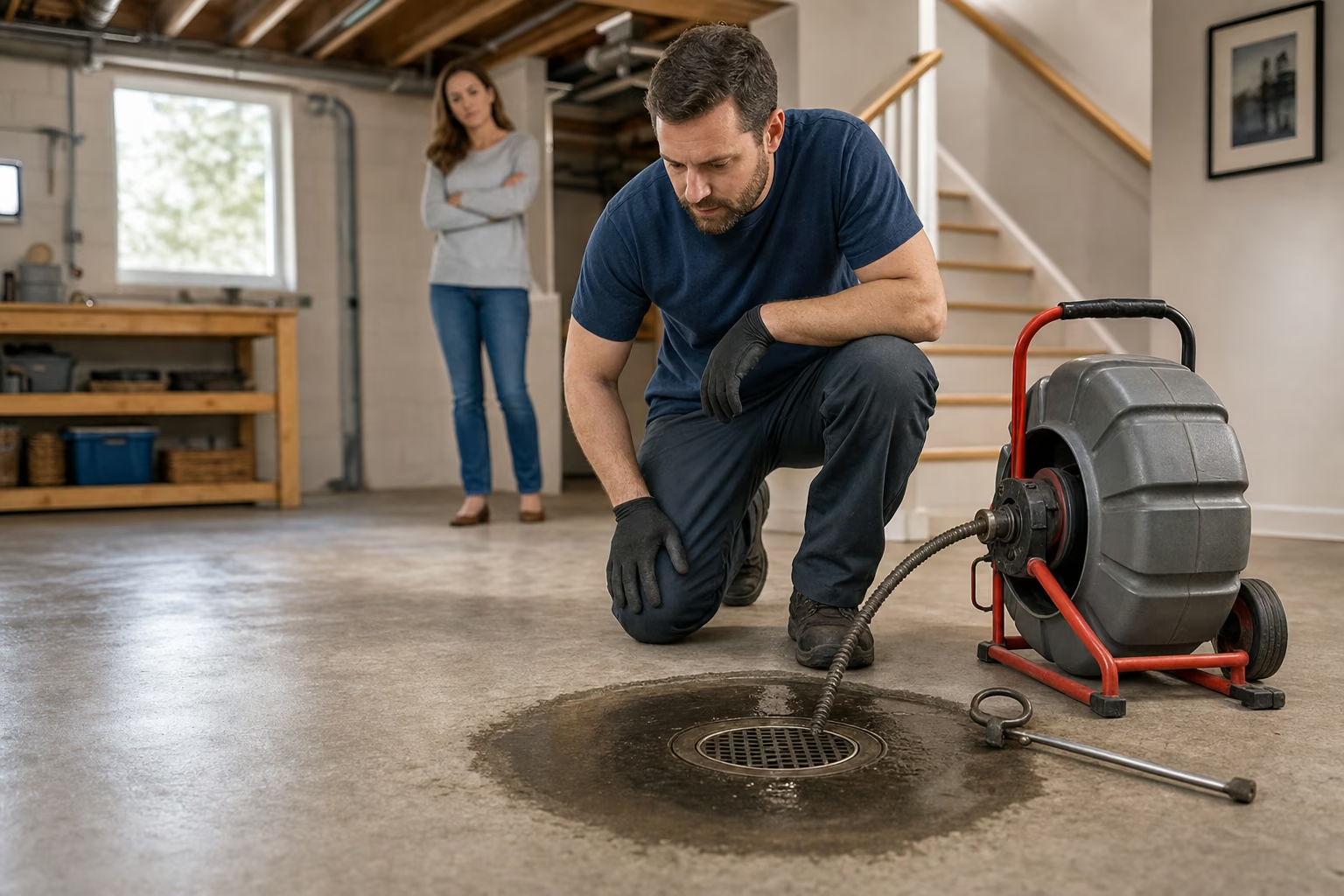
A floor drain is the fixture you never think about until it starts pushing water back at you. When a floor drain backs up in a basement, garage, or laundry room, it is rarely a small, isolated clog. More often than not, it is the lowest point in your home, signaling that something upstream or underground has gone wrong.
Related service: Clogged Drain Repair from Just Drains
Just Drains has spent decades diagnosing this problem across Howell and the surrounding Monmouth and Ocean County towns, where finished basements make a backed-up floor drain more than a nuisance. Below, we break down the three things a floor drain backup usually means, which are genuinely urgent, and what the fix looks like for each.
Understanding one piece of plumbing logic explains almost everything about this problem. Your floor drain sits at the lowest elevation in your waste system, and water flows by gravity. When wastewater cannot exit as it should, it backs up and escapes through the lowest opening, often the floor drain.
That is why a floor drain backup is a symptom worth close attention. The drain itself is usually not the problem. It is the messenger, and what it tells you depends on which of the following is happening.
This is the most common reason a basement floor drain backs up, and it is the most urgent.
When the main line carrying waste out of your home is obstructed, everything upstream has nowhere to go, so it backs up to the lowest fixture. The tell is unmistakable: the backup is not confined to the floor drain.
You will often notice a toilet gurgling when the washing machine drains, multiple fixtures running slowly at once, or sewage appearing at the floor drain when you use water elsewhere in the house. Common culprits include tree root intrusion into the sewer lateral, heavy grease and debris buildup, or a structural fault in an aging pipe.
Urgency: high. A main line blockage means wastewater is actively backing up into your living space, and every additional gallon you send down any drain makes it worse.
This is not a health risk to shrug off. A University of Maryland School of Public Health study of homes with recent sewage backups found that 34 of 40 homes tested carried at least one harmful bacterium, sometimes more than six months after the sewage had cleared. The practical takeaway is simple: keep people and pets away from the affected area, stop running water, and do not attempt to wade in and clear it yourself.
The fix: A professional locates the blockage, typically accessing the main line through your sewer cleanout, and clears it with a motorized sewer auger or, for grease and scale, hydro jetting. A camera inspection often follows to confirm the cause and rule out a structural problem.
This one applies to homes with a sump system, which includes many finished basements in our service area, and it is often mistaken for a sewer problem because the symptoms can look similar at first.
A sump pump manages groundwater, moving it out of a pit beneath the basement before it can flood the floor. When the pump fails, whether from a stuck float switch, a seized motor, a tripped breaker, or a power outage during the storm you needed it most, that groundwater rises and can surface at the floor drain.
The key is context: the backup lines up with heavy rain or snowmelt, the water is comparatively clear rather than sewage-contaminated, and you may notice the pump running constantly or not at all.
Urgency: moderate to high, and weather-dependent. A failed pump during a dry spell buys you time. A failed pump with a storm bearing down does not.
The fix: This is where careful diagnosis matters, because the remedy depends on the true cause. If the floor drain is clear and the issue is genuinely the pump, that is an electrical or pump-replacement matter. But sump-related backups and drain backups are easy to mistake for one another, so a proper diagnosis determines which problem you have before anyone starts replacing parts.
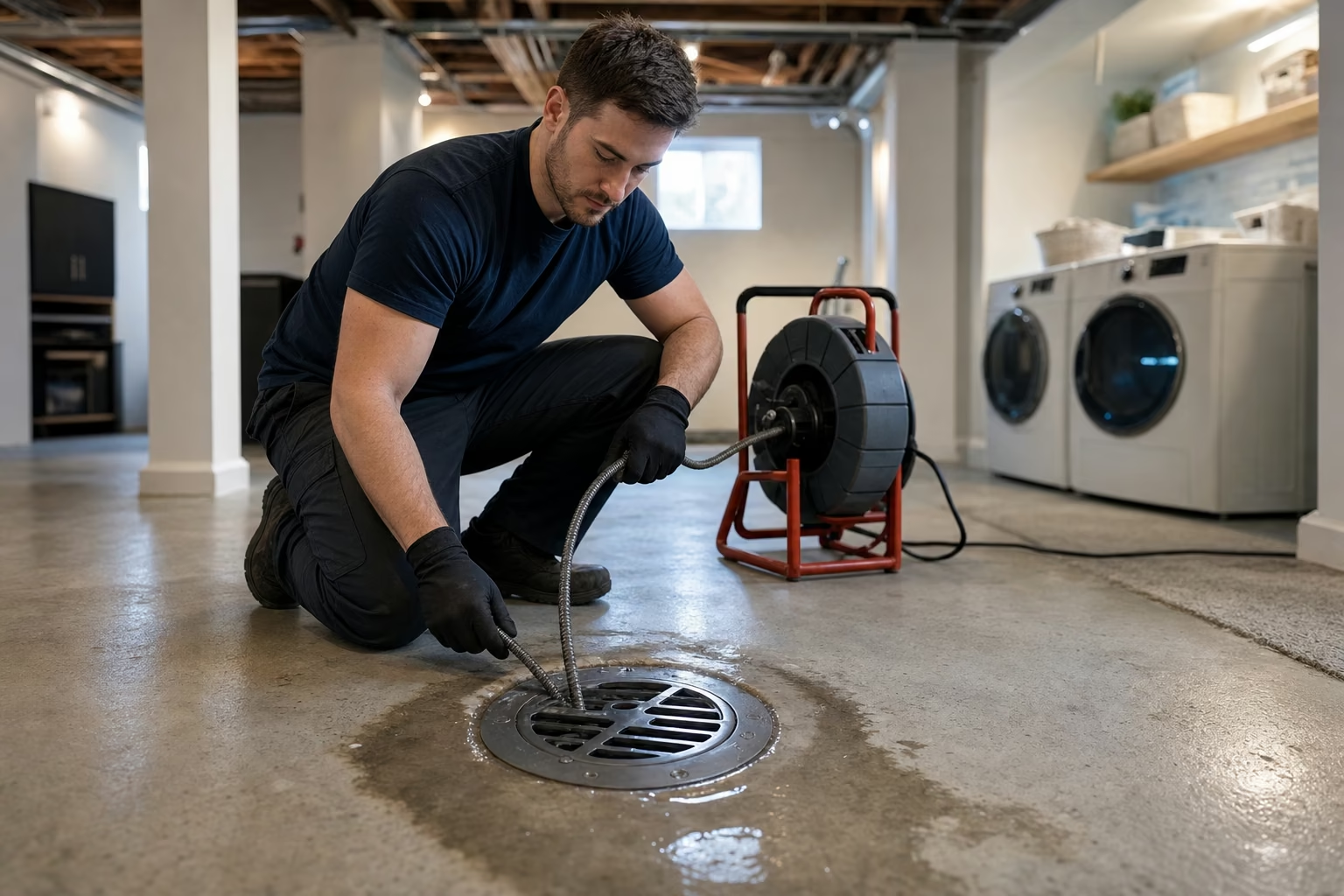
The least severe cause, and the only one that is sometimes localized rather than systemic, is a blockage in the floor drain’s own trap.
Like every drain, a floor drain has a U-shaped trap beneath it that holds a small amount of water to block sewer gas from entering the room. Over the years, that trap can accumulate sediment, laundry lint, silt, or debris, especially in a laundry room floor drain handling machine discharge. When the trap or the short line leading from it clogs, water pools at the drain with no wider symptoms elsewhere in the house. If this is the cause, you will typically see the problem isolated to that one drain, with every other fixture behaving normally.
Urgency: low. An isolated trap blockage is inconvenient but not an emergency, provided no sewage is present.
The fix: A technician mechanically clears the trap and its branch line during a routine drain cleaning visit. It is a straightforward job, but confirming the trap is truly the whole story, and not the first visible sign of a larger main line issue, is why even this milder case is worth a professional eye rather than a guess.
Here is the clear throughline across all three causes: the symptom looks the same, but the meaning is completely different, and telling them apart is the entire job.
A homeowner seeing water on the floor cannot easily distinguish a main line blockage from a sump failure or a trap clog, yet the response for each is different, and getting it wrong is costly.
Pouring a chemical cleaner into a floor drain backed up by a main line only increases the risk of standing sewage. This is a diagnostic problem first and a clearing problem second, which is precisely why it calls for a professional.
Consider what happened to Crystal Suarez, whose den flooded one evening. Like most people facing water where it should not be, her household assumed the simplest explanation: a clogged drain. Just Drains was at her home early the next morning, snaked the drain, and found the problem was far worse than a simple clog. Our team walked her through everything that needed to be done and returned the following morning to carry out the repair. What stood out to her was the communication.
As she put it:
“The guys were great at explaining everything that needed to be done; they were back the following morning to fix the problem. They even took the time to explain and give me updates on the progress through the day. They are responsible, friendly and honest!”
Read Crystal’s full Google review.
The main takeaway is simple: accurate diagnosis matters, because a quick assumption of “just a clog” would have left the actual problem unaddressed and the flooding free to return. Instead, the correct issue was identified, explained, and properly repaired, which is the difference between a fix that lasts and one that fails again next week.
When your floor drain is backing up, you need someone who can tell you which of the three problems you actually have, not someone who reaches for a snake and hopes. Just Drains is a father-son company with three generations of plumbing experience. Operating right out of Howell, we know the finished-basement homes across Monmouth and Ocean Counties and the specific ways they flood, and we diagnose the real cause before we quote a fix. Schedule your drain line inspection online today.

That usually points to a main line blockage, since the drain water has nowhere to go and surfaces at the lowest fixture. It is a sign the problem is shared, not isolated to the floor drain.
If sewage is present or multiple fixtures are affected, treat it as urgent and stop using water. An isolated trap clog with clean water and no other symptoms is less pressing.
No. If the cause is a main line blockage, the cleaner just sits in standing water, posing a hazard, and it can damage pipes without clearing the obstruction.
That commonly indicates a sump pump failure or groundwater overwhelming the system, especially if the water is relatively clear rather than sewage.
It is safer not to. Backed-up sewage carries harmful bacteria, so keep people and pets away and have the source cleared professionally before any cleanup.


Get an honest answer before it turns into a bigger job. Free estimates across New Jersey, 24/7.
Claim Your Offer
Tell us where to send it. We will email the coupon straight away so you can show it when you book.
One offer per job. Show the coupon at time of service. Prefer to talk? Call (732) 320-9860, 24/7.