



If your kitchen sink drains more slowly every month, no matter what you pour down it, the culprit is almost always grease. Grease buildup in kitchen drains is the most common root cause of kitchen plumbing problems and the most misunderstood, because the habits people rely on to prevent it actually make it worse.
Related service: Clogged Drain Repair from Just Drains
Just Drains has spent decades clearing greased-up kitchen lines across Howell and nearby towns in Monmouth and Ocean counties. This guide explains how grease accumulates in a drain, when DIY remedies stop working, and why professional hydro jetting fully removes grease blockages rather than just poking holes in them.
To clear grease effectively, you must understand what it does after leaving your pan, because it does not behave as it may seem.
When you rinse a greasy skillet, the fat leaves as a warm liquid and slides down the drain without a trace. That is the deception. According to the Environmental Finance Center Network, an EPA-funded technical assistance network, fats, oils, and grease enter as liquid when heated, then cool and solidify inside the pipe.
A few feet downstream, out of sight, that warm liquid meets cooler pipe walls, thickens, and congeals into a waxy film clinging to the interior of the line.
From there, it compounds. Grease is hydrophobic, so it groups together and grabs onto everything else moving past: food particles, coffee grounds, eggshell fragments, and the “flushable” wipes that never should have entered the system. Each rinse lays down another layer.
Over weeks and months, the pipe’s effective diameter shrinks, the flow slows, and what began as an invisible film becomes a dense, solidified mass. This is why kitchen drain grease buildup announces itself gradually, a little slower each week, rather than all at once.
This is the part almost everyone gets wrong, and it is worth being direct because conventional wisdom actively backfires.
The instinct is reasonable: hot water and grease-cutting dish soap melt and emulsify fat in the sink, so it seems they would do the same in the pipe. And briefly, they do. The problem is what happens next.
In practical terms:
You are not clearing grease with these methods. You are moving it, which usually makes the clog worse.
There is a clear line between a grease problem you can manage and one that needs a professional, and knowing it saves you money and mess.
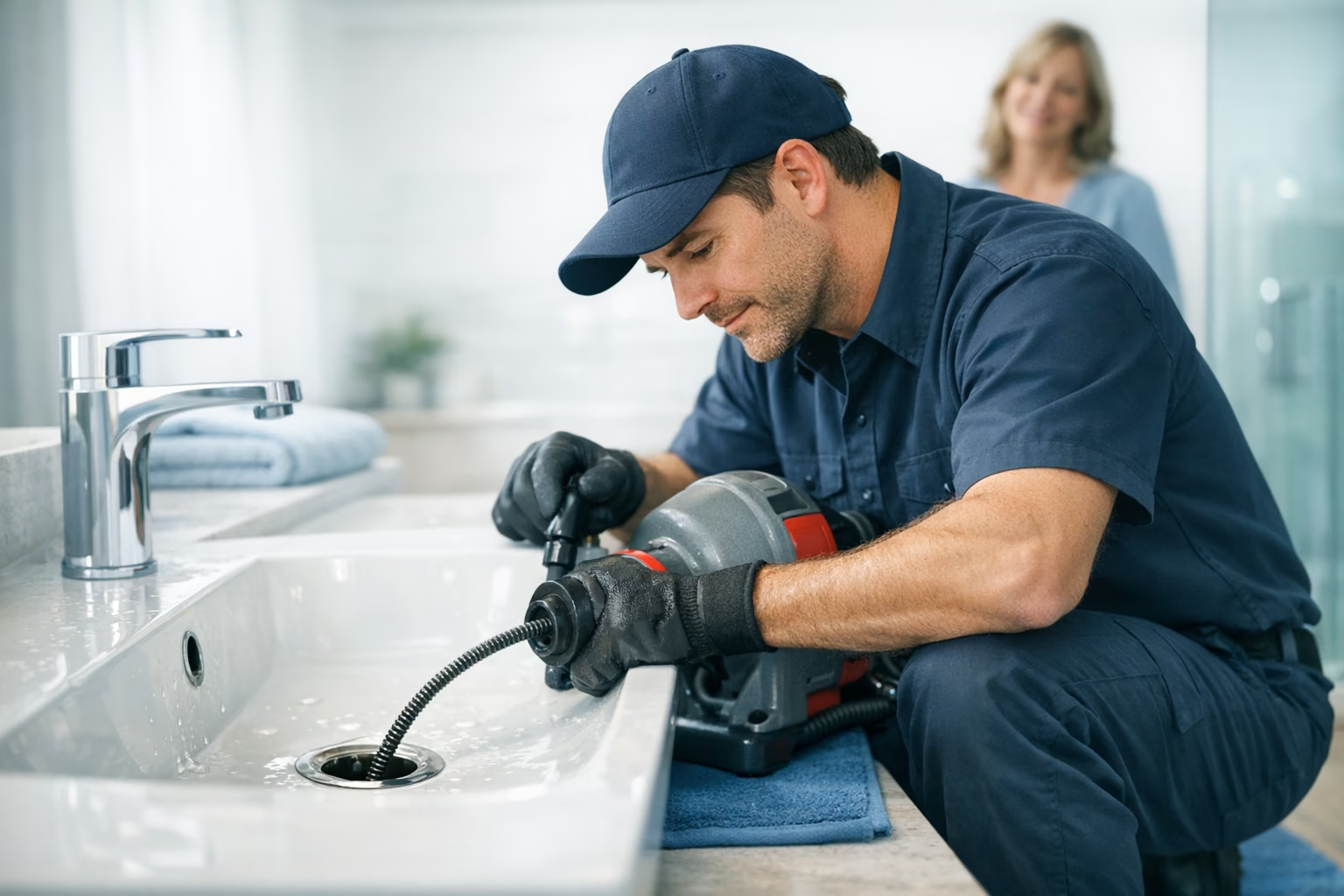
Early on, when buildup is minor and recent, diligent habits and a plunger or hand-operated drain snake may keep a single kitchen sink flowing.
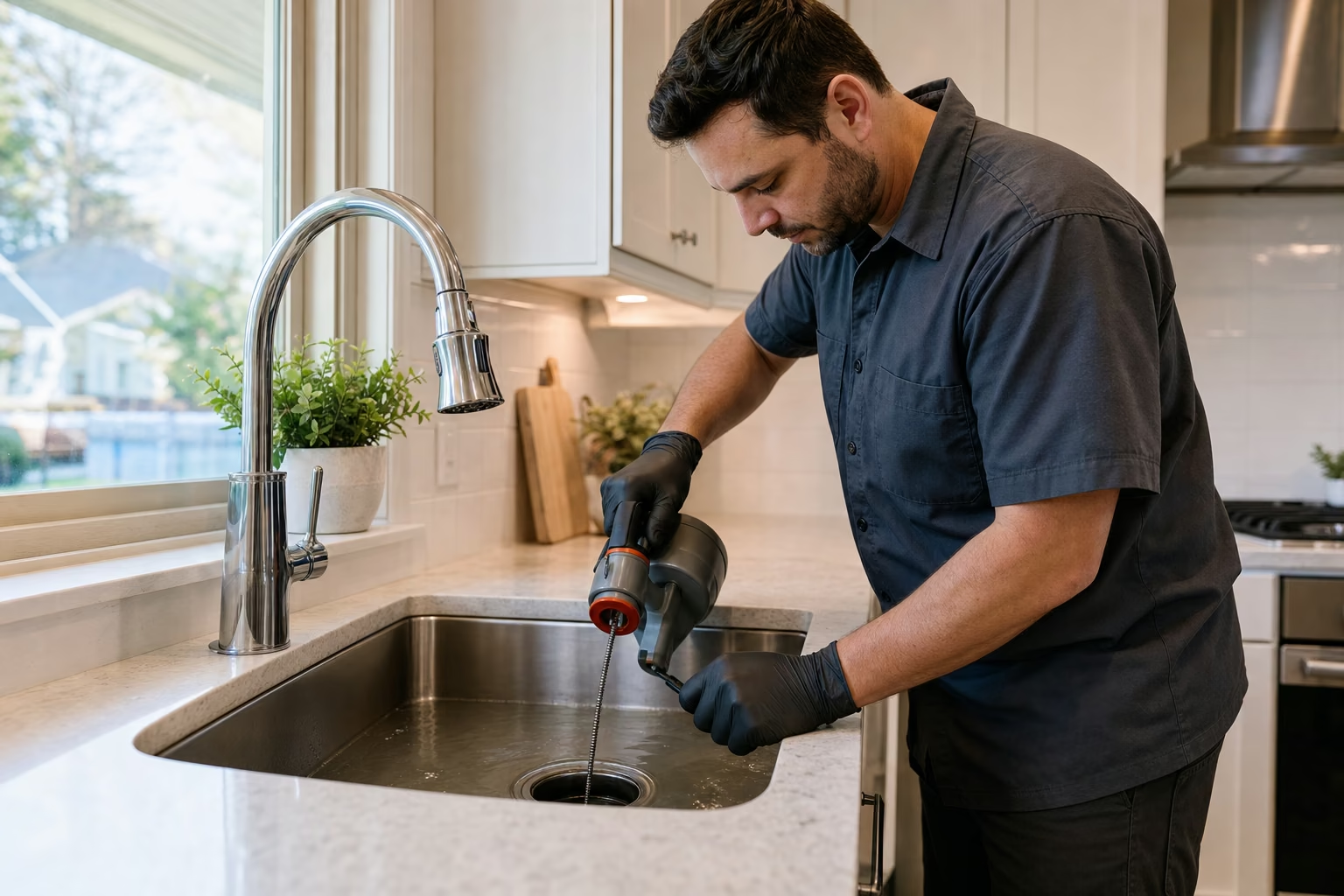
But a cable snake has a limitation regarding grease. It is designed to break through or hook a solid obstruction, so on a greased line, it tends to punch a hole through the center of the deposit. Water flows again for a while, which feels like a success, but the grease coating the pipe walls remains, immediately narrowing the channel.
That is the sign DIY has run out: a clog that clears briefly and returns, especially in the same spot, means the pipe is lined with hardened grease that no snake or store-bought product will remove. At that point, professional drain cleaning is the practical next step.
Chemical drain cleaners are not the answer either, since they pose burn and pipe-corrosion hazards and rarely reach deep grease blockages.
Removing a grease blockage completely, rather than boring through it, requires scrubbing grease off the pipe wall, and that is what hydro jetting does.
A hydro jetter delivers water through a specialized nozzle at high pressure, blasting the pipe’s interior from wall to wall. Where a cable leaves the greasy coating in place, the jet scours it off entirely, restoring the pipe’s full diameter and washing debris out of the system.
It reaches the full length of the line, not just the visible clog, so it addresses layered buildup upstream and downstream rather than at one spot.
For chronic or severe grease buildup, it is the only method that delivers lasting results. A qualified technician sets the pressure for your pipe’s material and condition, ensuring thorough cleaning without damage.
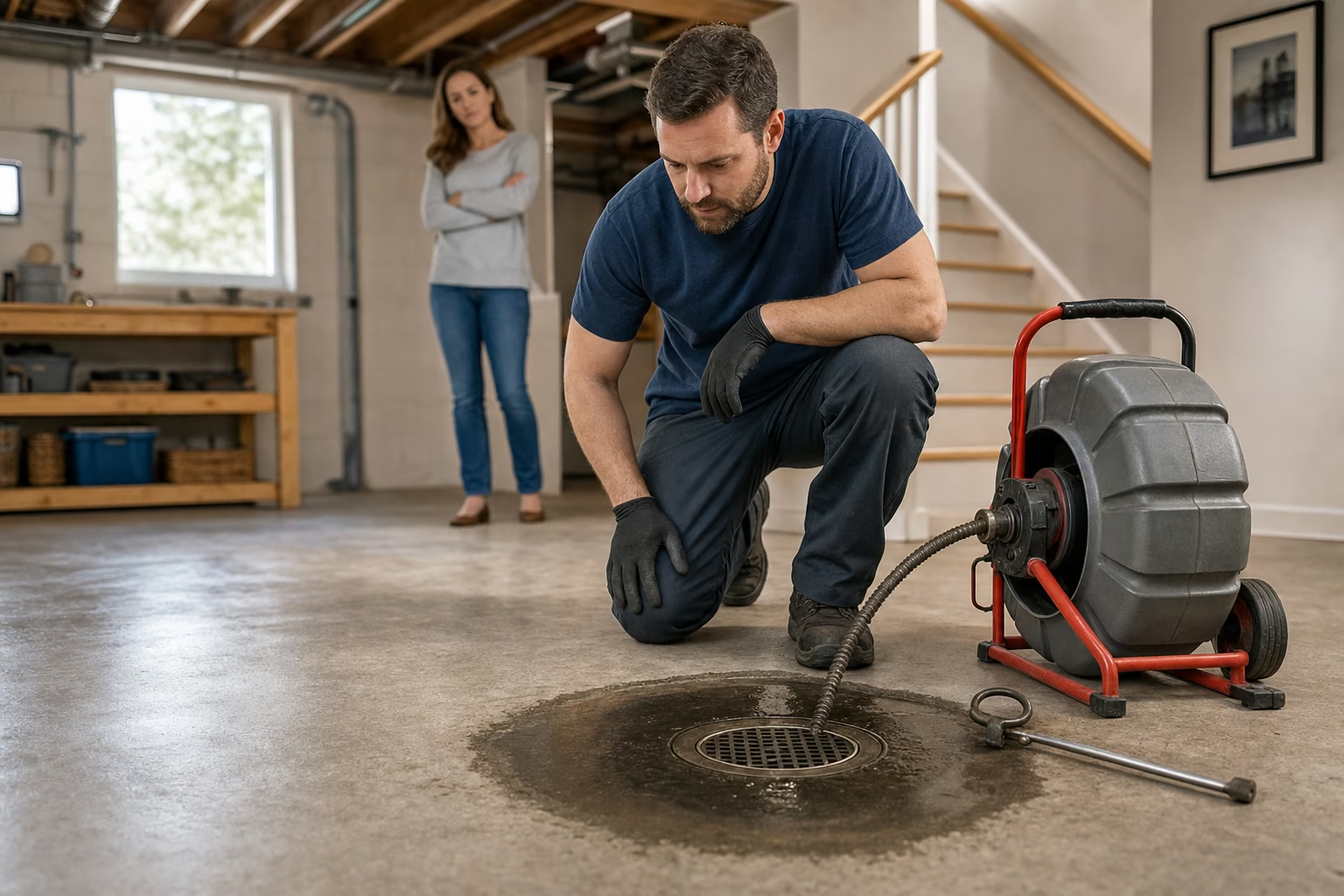
Picture a kitchen sink that has stopped draining entirely late in the evening, the counter piling up, and no clear sense of whether this is a quick fix or the start of something expensive. That uncertainty, at the end of a long day, is exactly the situation George Hudak faced when he called Just Drains.
He wrote in his review:
“Paul and Jeff did their very best to clear the kitchen sink. Paul was here till 11:00pm. And did all he could with the equipment he had. Prox 8:30 pm arrival. Jeff arrived at 10:30 am and left at noon. The waste in our cast iron line came out in chunks. Cost total $950.00. It is 2 hrs later, and all is well so far. The waste in the pipe was from grease and food debris.”
Read George’s full Google review.
The outcome is a heavily greased cast iron line cleared of solidified waste, a homeowner kept informed through two visits, and flow restored to a pipe that quick snaking would never fully clean. It is a real-world example of why serious grease buildup is a professional job, not a bottle-under-the-sink one. If your line is already backing up, our emergency services team can help, or you can book your drain inspection online.
When grease has taken over your kitchen line, you want it gone, not relocated three feet down the pipe. Just Drains is a father-son company with three generations of plumbing experience, operating from Howell and serving the surrounding Monmouth and Ocean County communities. Clearing drains and sewer lines is all we do, so we have seen every stage of grease buildup and cleared it with precise tools, whether by snaking or hydro jetting. Book your drain inspection online today.

Cooking fats, oils, and food residue rinsed down the sink enter as a warm liquid, then cool and solidify on the pipe walls, layering over time into a hardened blockage.
No. Hot water only melts grease temporarily and carries it deeper into the line, where it re-solidifies in a cooler section and often creates a worse clog.
A snake usually just punches a hole through the grease, restoring flow briefly while the coating on the pipe walls remains, so the clog tends to return.
Hydro jetting uses high-pressure water to scour grease off the full interior of the pipe, removing the buildup entirely rather than boring a temporary channel through it.
Never pour cooking grease or oil down the sink. Let it cool and solidify in a sealed container, then throw it in the trash. Dry-wipe greasy pans before washing.


Get an honest answer before it turns into a bigger job. Free estimates across New Jersey, 24/7.
Claim Your Offer
Tell us where to send it. We will email the coupon straight away so you can show it when you book.
One offer per job. Show the coupon at time of service. Prefer to talk? Call (732) 320-9860, 24/7.