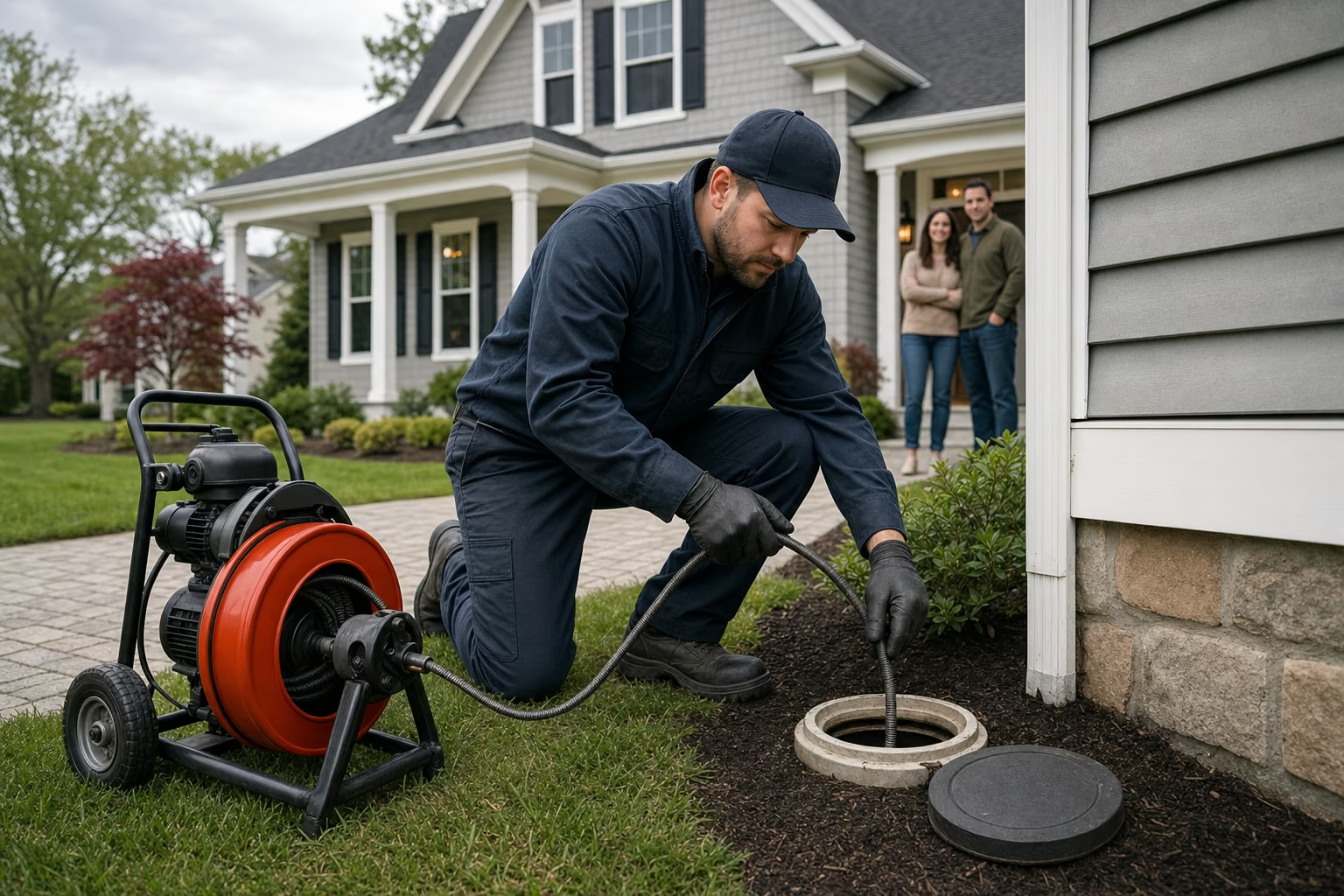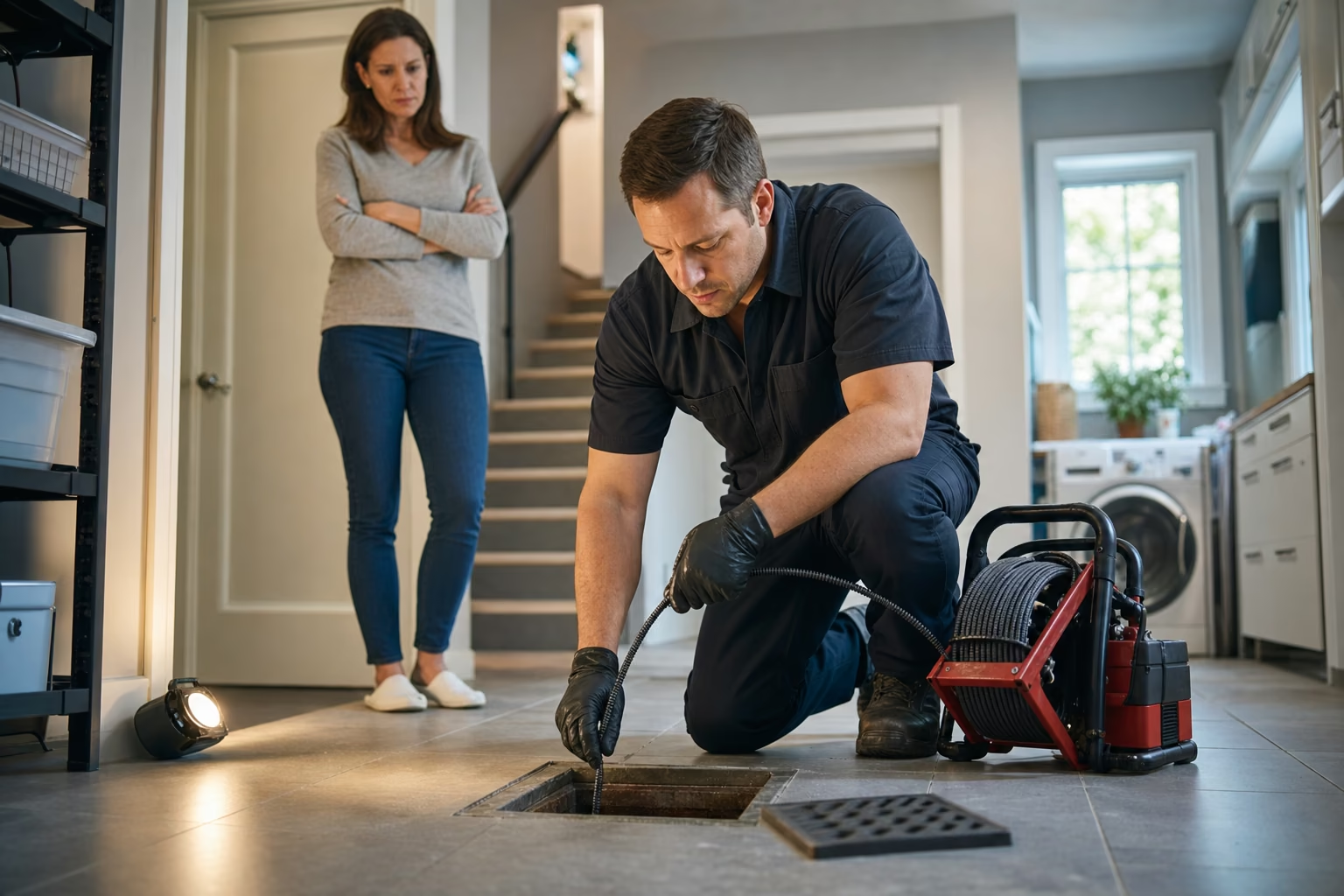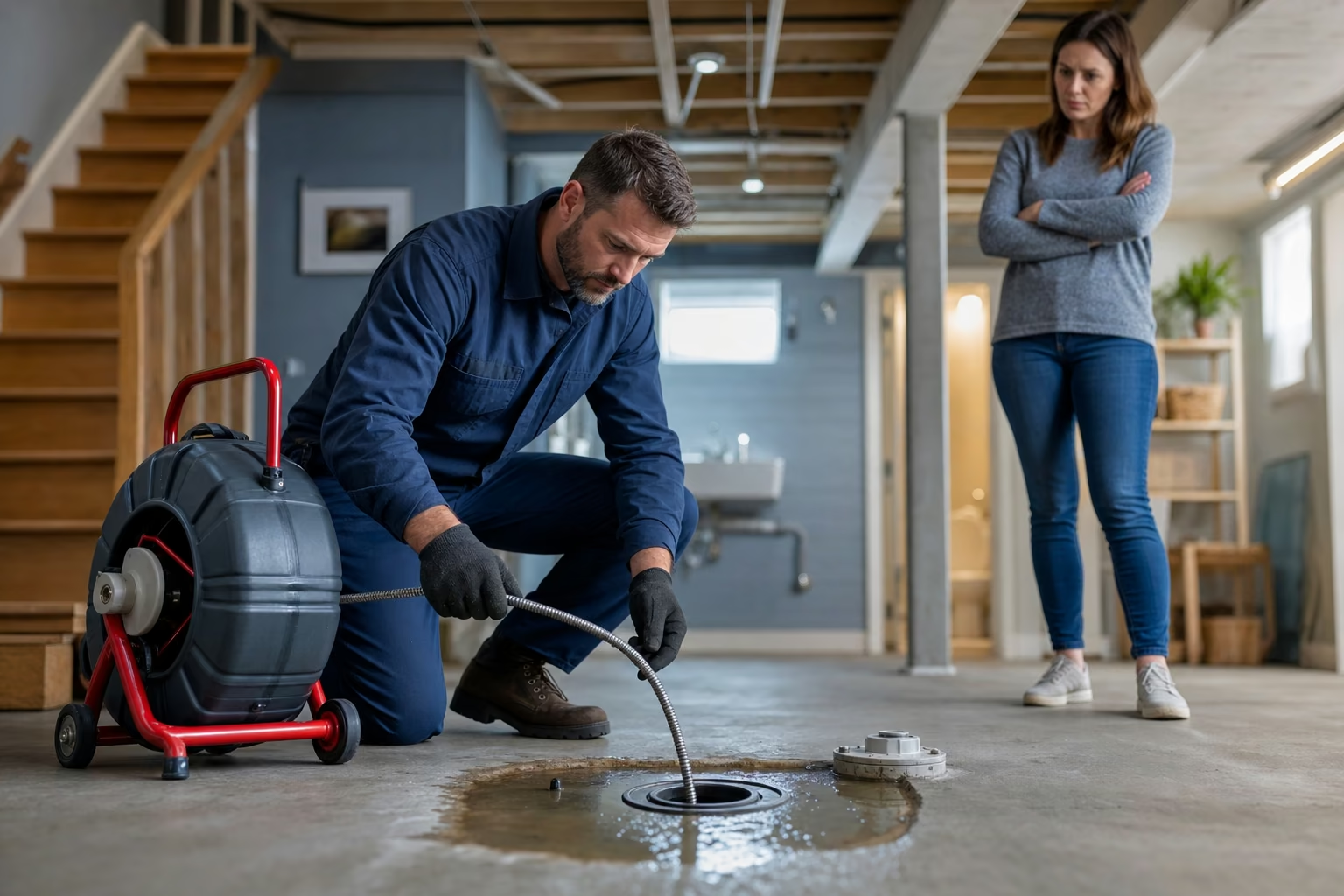




In the wooded neighborhoods of Monmouth and Ocean County, mature trees make a property beautiful but also pose a leading threat to the sewer line beneath it. A tree root in a sewer line is one of the most common and misunderstood plumbing problems homeowners face, and by the time symptoms are obvious, the damage is often well underway.
Related service: Sewer Line Repair from Just Drains
This guide explains how roots get into a sewer line, the warning signs, and the remediation process, from clearing the roots to assessing the pipe and repairing it if needed.
The mechanics are more deliberate than most realize. Tree roots do not blunder into sewer pipes by chance; they grow toward them on purpose. A sewer line carries warm, nutrient-rich wastewater and continuously releases faint water vapor through any joint, gap, or hairline flaw into the surrounding soil. Roots detect the moisture and nutrient gradient and grow straight toward the source.
Once a fine root tip reaches a leaking joint or small crack, it slips through the opening and enters the pipe interior, where it finds the water and nutrients it was seeking. From there it flourishes, expanding into a dense mass that snags grease, toilet paper, and debris flowing past, steadily widening the opening it entered.
Here is the part worth understanding, because it changes how you think about the problem. Roots do not break into sound pipes. The New Jersey Department of Environmental Protection notes that tree roots cannot create cracks in a sewer pipe; they can only exploit existing cracks or gaps.
Put plainly: if you have tree roots in your sewer pipe, it means you had a leaking pipe before the roots arrived. Roots are opportunists, not battering rams. That reframing matters because it shows the real issue is usually the condition of the pipe, which is why the material and age of your line are central.
If roots only exploit existing weaknesses, then pipes with the most weaknesses are most at risk, and in this area that means older clay and cast iron laterals.
Clay tile pipe was the residential standard from the early 1900s into the 1980s and is inherently vulnerable for one structural reason: it comes in short sections joined by many connections, each sealed with a compound that, after decades of freeze-thaw cycles, soil movement, and deterioration, shrinks and loosens. Every aging joint is a potential entry point for a root.
Cast iron, common in homes of the same era, fails differently but ends up in the same place. It corrodes from the inside over decades, roughening and cracking the pipe wall and opening the fissures that roots detect and enter.
Modern PVC is far more resistant, with smooth walls and far fewer, tighter joints, though even PVC is not immune if it was poorly installed or later damaged by shifting ground.
Root intrusion builds slowly, which is good news if you know what to watch for, because early signals give you a window to act before a full blockage forms. Watch for:
If several of these appear together, especially in an older home, roots are a leading suspect.
Getting rid of tree roots in a sewer line is a three-step process, and understanding it helps you recognize honest service from unnecessary upselling.
First, clear the roots. The most effective method is hydro jetting, which uses high-pressure water through a specialized nozzle to cut and flush out roots while scouring debris from pipe walls. A mechanical auger can cut roots too, but jetting removes the material more completely rather than just boring a channel.
Second, assess the pipe with a camera. This step separates guessing from knowing and is essential with roots. Because roots signal a pre-existing flaw, a camera inspection through the cleared line reveals the true condition of the pipe, where the roots entered, how much damage exists at that joint or crack, and whether the pipe is sound. You cannot make a smart repair decision without this.
Third, repair the pipe only if needed. If the camera shows the line is structurally intact and roots were caught early, clearing and a maintenance plan may be all you need. If it shows a cracked, collapsed, or severely compromised section, sewer line repair is warranted to address the flaw so roots cannot return to the same opening.
Key takeaway: because roots exploit existing damage, clearing alone is often a temporary fix that buys time rather than a permanent cure. Roots left inside a pipe can regrow. Regular cleaning keeps them in check, but recurring problems usually point to the need to repair the entry point.
Paul McMahon faced what he called a late-night weekend plumbing nightmare, the kind of main line failure that does not wait for business hours and that most companies will not respond to until the following week. Just Drains came through when others could not.
As Paul described it:
“These guys saved us from a late-night weekend plumbing nightmare! Unbelievably responsive and prompt service. They took care of a main line and sewer pipe replacement over the weekend when other companies could not even get someone out to look at the job. Thank you, Paul, Andre, and Robbie, for coming to the rescue!”
Read Paul’s full Google review.
The outcome shows what matters most when a sewer line fails: a company that shows up when you are stuck, completes major work rather than applying a stopgap, and restores a functioning line, turning an emergency into a solved problem.
Roots in a sewer line are not a problem to wait out, because they only grow and the pipe they exploit deteriorates further. Just Drains is a father-son company with three generations of plumbing experience, operating out of Howell and serving Monmouth and Ocean counties, where wooded lots and older pipes make root intrusion a routine call. We clear roots with hydro jetting, show you the true condition of your line with a camera, and recommend repair only when the pipe actually needs it. Book your sewer line inspection online today.

Roots grow toward moisture and nutrients that escape from a pipe, enter through existing cracks or loose joints, and then expand inside the line.
No. Roots cannot create cracks. They only exploit existing gaps or damage, which means roots in a pipe indicate the pipe was already leaking.
Older clay and cast iron pipes are most at risk because their many aging joints and corrosion-prone walls create the openings roots exploit, while modern PVC resists intrusion better.
Hydro jetting cuts and flushes the roots out, a camera inspection assesses the condition of the pipe, and the entry point is repaired if the line is cracked or damaged.
Often yes, because clearing alone does not seal the opening roots entered through, so recurring intrusion usually calls for repairing the damaged section of pipe.


Get an honest answer before it turns into a bigger job. Free estimates across New Jersey, 24/7.
Claim Your Offer
Tell us where to send it. We will email the coupon straight away so you can show it when you book.
One offer per job. Show the coupon at time of service. Prefer to talk? Call (732) 320-9860, 24/7.