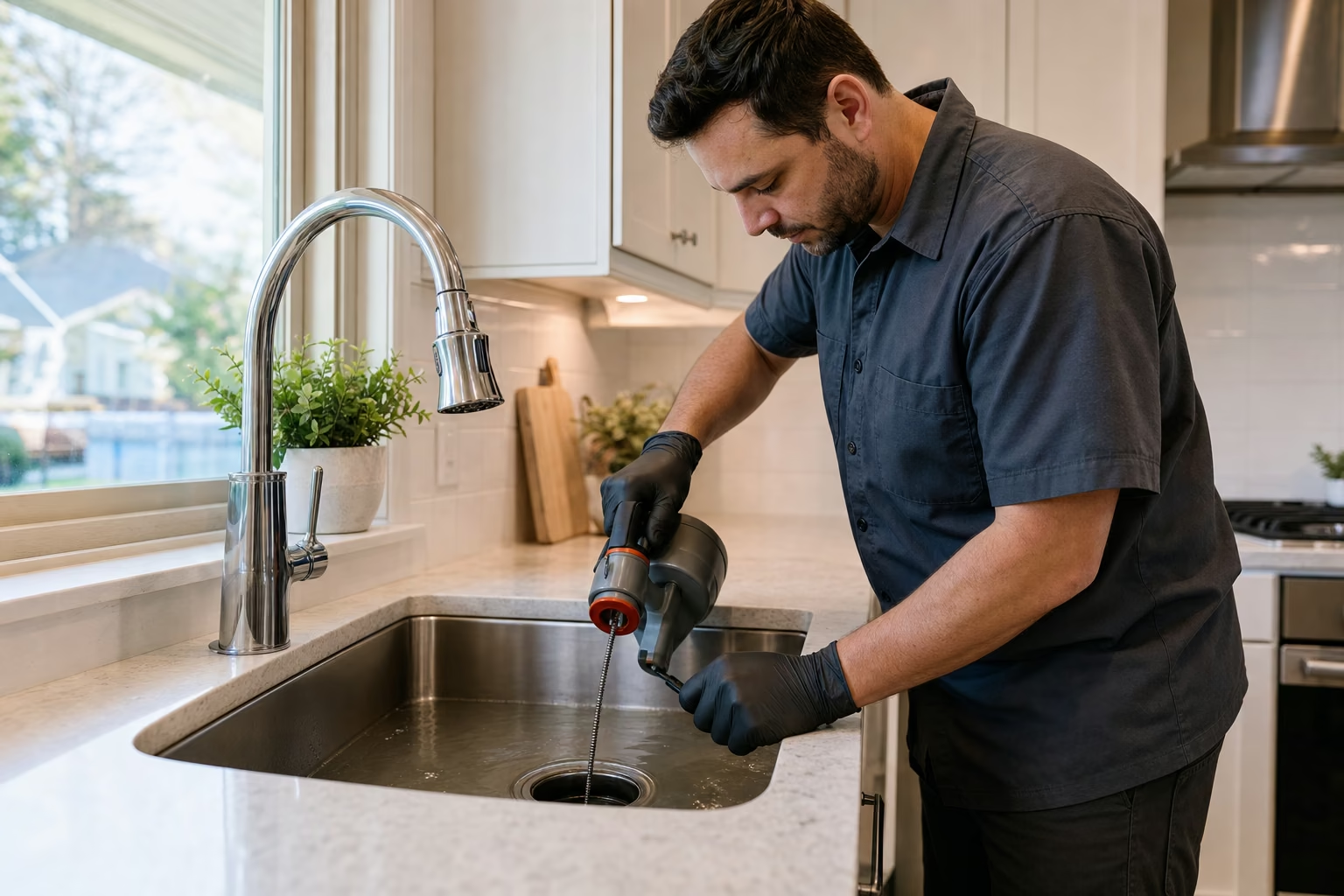




One slow drain is annoying. Multiple slow drains in the house at the same time are a warning sign. When the bathroom sink, kitchen sink, and tub all drain sluggishly together, the problem is usually not in any one fixture. It is in the line they share. Catching it at this stage is fortunate because you have found the problem before it becomes a disaster.
Related service: Clogged Drain Repair from Just Drains
To understand why multiple slow drains matter, picture how your home’s plumbing is arranged. Every fixture, sink, toilet, tub, and shower, has its own small branch pipe. All these branch pipes empty into one shared line that carries everything out through the sewer system. It is a tree structure: many small branches feeding a single trunk.
That layout is the whole diagnosis. When one fixture drains slowly, the obstruction is almost always a localized clog in that fixture’s branch pipe. But when drains slow across the house, in different rooms and branches at once, no single branch can explain it.
The only thing all those fixtures have in common is the shared line, so a slowdown points to a partial obstruction in that trunk. This is why “all the drains in the house are slow” is a fundamentally different report from “my bathroom sink is slow,” and why professionals treat it with more urgency.
A main line problem is not a single event; it is a progression, and slow drains mark its early stage. That is why this article is worth reading before you do anything else.
Three culprits account for most partial main line obstructions, and two of them are especially common in older, tree-lined New Jersey neighborhoods.
The first and most frequent is tree root intrusion. Roots seek moisture and nutrients within the line, enter through tiny cracks or pipe joints, and then expand. The scale of this is easy to underestimate. The U.S. Forest Service says tree roots cause more than half of all sewer blockages. Root interference is most likely in older systems and in cracked pipes, which are common in many established homes in this area.
The second is grease and debris buildup, where fats, food waste, and non-dissolving items layer onto the pipe wall over time and steadily narrow the passage. Routine drain cleaning keeps that layer from taking hold.
The third is the aging pipe itself. Older cast-iron lines corrode and roughen internally, giving both roots and debris more to catch on and accelerating the buildup. When the pipe wall itself has failed, sewer line repair is the fix rather than another cleaning.
It is tempting to treat slow drains as a low-priority annoyance, something to deal with eventually. With a main line issue, that instinct is costly for a simple mechanical reason: the obstruction does not hold steady; it grows.
A partially blocked line traps more material. The narrowed section slows the flow, and slower flow allows more grease, debris, and root growth to settle and accumulate in the same spot.
The blockage slowing your drains today is building toward one that will stop them entirely. Waiting does not maintain the status quo; it advances the problem. The cost curve is steep: clearing a partial obstruction now is straightforward, whereas a full backup results in contaminated water, property damage, and a much larger bill. If it has already reached that point, emergency service is the only option left.
Acting while your drains are only slow is the cheapest this problem will ever be.
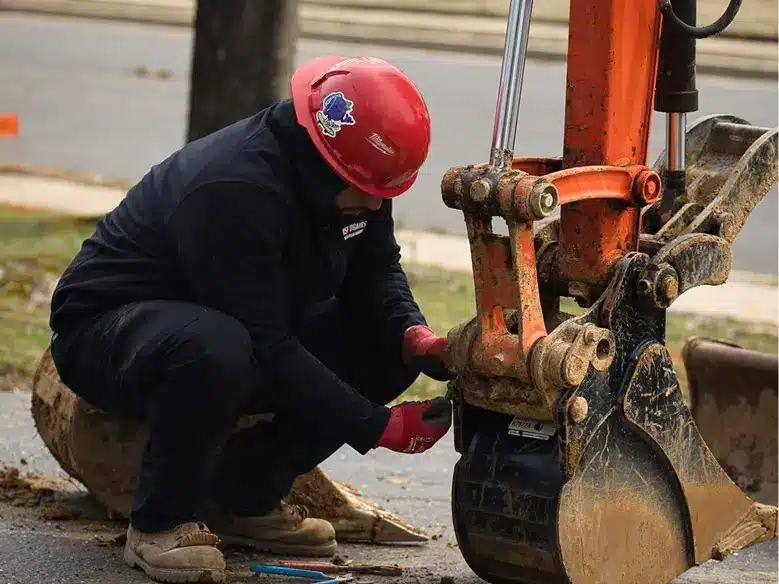
When you call about slow drains throughout the house, the goal is to clear the obstruction and determine its cause. This tells you whether it is a one-time cleaning or a sign of something structural.
A technician accesses the shared line through your cleanout and clears the obstruction mechanically with a motorized auger, or with hydro jetting when grease or heavy buildup coats the pipe walls. For a line that has not been serviced in years, a full sewer cleaning restores the original diameter.
The step that matters most at this stage is diagnosis. A camera inspection sends a waterproof video head through the line to reveal exactly what narrowed it, whether roots at a joint, a grease layer, or a corroded or cracked section, and precisely where.
That is the difference between guessing and knowing. It is why the early-warning stage is the ideal time to look. You can see the pipe’s true condition before an emergency forces the issue.
Hemant Jain ran into a stubborn kitchen sink drain and, like many people, started with an online search before calling Just Drains. Just Drains sent Tim H within about three hours of the call. Tim used a power drain machine to run roughly 70 feet into the kitchen drain pipe and cleared the blockage in no time.
Hemant shared:
“I had an issue with my kitchen sink drain, looked up on internet and found Just Drains for $99, I called them and within 3 hours they sent Tim H to my house, he cleared blockage within no time, used his power rotorooter to go through the kitchen sink drain pipe about 70′, Tim is not only a great tech but a wonderful friend and cordial person. I highly recommend using Tim for your drain cleaning service. I will use him again.”
Read Hemant’s full Google review.
The outcome shows why prompt, properly equipped service matters: a blockage that resisted DIY effort was cleared quickly and completely. This gave the homeowner confidence in the line rather than a nagging worry that it would return. That is the value of bringing in the right tools early. If your drains are slow in more than one room, you can book your service online today.
Slow drains in multiple rooms are your early warning. The smartest response is to have the line looked at while the problem is still small. Just Drains is a father-son company with three generations of plumbing experience, operating out of Howell and serving the surrounding Monmouth and Ocean County communities. Diagnosing and clearing main-line obstructions before they cause backups is what we do. Book your service online today.

Simultaneous slow drains across multiple rooms usually point to a partial obstruction in the shared main line rather than a clog in any single fixture.
Not yet, but it is an early warning sign of a main-line problem that will worsen, so it is best addressed promptly before it becomes a full backup.
Generally, no, because a main line obstruction is deep in the system, beyond the reach of household tools, and requires professional equipment to clear and diagnose.
The most common causes are tree root intrusion, grease and debris buildup, and corrosion in aging pipes, with roots being the leading cause of sewer blockages overall.
A professional conducts a camera inspection through the line to identify the exact cause and location of the obstruction, then clears it with an auger or hydro jetting.


Get an honest answer before it turns into a bigger job. Free estimates across New Jersey, 24/7.
Claim Your Offer
Tell us where to send it. We will email the coupon straight away so you can show it when you book.
One offer per job. Show the coupon at time of service. Prefer to talk? Call (732) 320-9860, 24/7.